






Find your perfect trip!
Find your perfect trip!


8-day Fishermen's Trail Walking Tour: from Arrifana to Lagos
8-day Fishermen's Trail Walking Tour: from Arrifana to Lagos
style :
Level :


Duration :
8 days
Comfort :


period:
Feb Mar Apr May Jun Jul Aug Sep Oct Nov Dec
Code:
PTSW002
8-day Fishermen's Trail Walking Tour: from Arrifana to Lagos
8-day Fishermen's Trail Walking Tour: from Arrifana to Lagos
Self-guided walking tour along the southern coastal path of Rota Vicentina
Is this tour for me?
This 8-day Fishermen’s Trail walking holiday follows the southern section of Portugal’s famous Rota Vicentina, from Arrifana to Lagos. Walk along the wild Atlantic coast passing dramatic cliffs, secluded coves, golden beaches, and charming towns such as Carrapateira, Vila do Bispo, and Sagres. Daily walks follow well-marked coastal trails, offering a moderate challenge, while evenings are spent enjoying fresh seafood and the relaxed atmosphere of Portugal’s western Algarve.
- The southern stretch of Portugal’s GR-11 “Fishermen’s Trail” along the Vicentine Coast
- Idyllic scenery of cliffs, coves and golden beaches backed by dunes
- Explore the less-known western Algarve, far from the busy resort areas
- Walk through the Southwest Alentejo and Vicentine Coast Natural Park all the way to Cape São Vicente, the southwestern tip of Europe
- Charming coastal towns such as Arrifana, Carrapateira, Vila do Bispo, Sagres and Lagos
- Fresh seafood, excellent wines and the relaxed Portuguese lifestyle
- See the historic fortresses of Arrifana, Sagres and Cabo de São Vicente
- Trails designed and maintained by the Rota Vicentina Association, with S-Cape Travel as a supporting member since 2015


View map
ITINERARY
Start: Arrifana Finish: Lagos
Day 1: Arrival in Aljezur
Day 2: From Arrifana to Carrapateira (16 - 19 - 23 km / 10 - 12 - 15 mi)
Day 3: Loop walk Carrapateira (10 - 22 km / 6 - 14 mi)
Day 4: From Carrapateira to Vila do Bispo (16 - 19 km / 10 - 12 mi)
Day 5: From Vila do Bispo to Sagres (20 km / 12 mi)
Day 6: From Sagres to Salema (16 - 20 km / 10 - 12 mi)
Day 7: From Salema to Lagos (17 - 23 km / 11 - 14 mi)
Day 8: End of programme
Day 1: Arrival in Aljezur
After arriving in Aljezur, a peaceful whitewashed village on the Costa Vicentina, you can take some time to wander its quiet streets and enjoy the relaxed atmosphere. Don’t miss the Moorish castle with its valley views or a stroll through the charming old quarter.
Day 2: From Arrifana to Carrapateira (16 - 19 - 23 km / 10 - 12 - 15 mi)
Your first route will depend on the tides, as the Fishermen's Trail near Carrapateira can only be done at low tide as there is no escape route on some parts of the 100m-high cliffs when the tide comes in. Inland is the alternative Rota Vicentina route, the so-called Caminho Histórico, which leads through a surprisingly beautiful rural setting alternating between maquís, pine forests and open meadows with old cork and holm oaks. Whatever you do, the day starts with a short taxi ride to the fishing village of Arrifana (or even further south to Monte Novo, hence shortening the route).
Challenge: 4.5 / 6 / 7 hrs, 16 - 19 - 23 km / 10 - 12 - 15 mi, 175 / 200 / 325 m ascent, 250 / 265 / 425 m descent
Villages along the way: Arrifana, Bordeira, Carrapateira
Day 3: Loop walk Carrapateira (10 - 22 km / 6 - 14 mi)
Today you can pick from two loop walks. The first route is a short circular walk, which takes you along the coast and the beaches of Carrapateira. If you feel up for a challenge, you can take the longer option of 21.9 km with both coastal and inland sections, to the completely restored village of Pedralva.
Challenge: 3 - 6.5 hrs, 10 - 22 km / 6 - 14 mi, 125 - 215 m ascent / descent
Day 4: From Carrapateira to Vila do Bispo (16 - 19 km / 10 - 12 mi)
In the morning, you continue further south following the fisermen's trails on top of the cliffs and partly through the undulating inland, until suddenly the historic town of Vila do Bispo comes into sight. Especially at the start of the walk, you are very likely to encounter fishermen, balancing on protruding rocks.
Challenge: 6-7 hrs, 19 km / 12 mi, 400 m ascent , 350 m descent
Villages along the way: none, only the beach do Amado
Day 5: From Vila do Bispo to Sagres (20 km / 12 mi)
A spectacular stage today as you round the south-western most point of Europe via barren lime stone cliffs. Visit the old fortress and light house at the windswept Cape São Vicente and then follow the coastline eastwards to the fortress of Sagres. In this beach town you will stay for two nights close to the beach and near the marina of Baleeira.
Challenge: 5-6 hrs, 20 km / 12 mi, 120 m ascent, 200 m descent
Day 6: From Sagres to Salema (16 - 20 km / 10 - 12 mi)
The section between Sagres and Salema is one of the most challenging stages of the Fishermen's Trail, as you constantly ascend and descend the cliffs following stony foot paths. But it is also one of the most beautiful stages: wind and water have formed the bizarre rock formations here, for which the Algarve is famous. You will be rewarded for all the effort with beautiful views and numerous opportunities to swim at the beaches of Martinhal, Barranco, Ingrina, Zavial, Furnas, Figueira or Salema. There were pottary factories on the plains in roman times and the remains of a 18-century fortress at Ponte de Fisga.
If you find 20 km too much you can ask the taxi to pick you up in Figueiras (after 16 km) instead of Salema as you will return to the hotel in Sagres in the afternoon.
Challenge: 5 - 6.5 hrs, 16 - 20 km / 10 -12 mi, 260 or 345 m ascent, 230 or 370 m decent
Villages along the way: Martinhal, Figueira
Day 7: From Salema to Lagos (17 - 23 km / 11 - 14 mi)
A taxi takes you back to Salema this morning, or a little bit further east to Burgeau, where you will begin the final hike along the Fishermen's Trail. Along the way, you can admire the famous natural caves and arches at Ponte do Piedade and Praia do Camilo beach. Along this coast, several forts were built by Romans, Arabs and Portuguese to protect the population from pirates. The route and journey ends in the historic town of Lagos, on the banks of the river Bensafrim.
Challenge: 5.5 -7 hrs, 17 - 23 km / 11 -14 mi, 330 - 530 m ascent & descent
Villages along the way: Brugeau, Luz, Lagos
Day 8: End of programme
After breakfast your arrangement ends.
ACCOMMODATION
Where will you stay?
The hotels on this trip have been carefully selected for their location, atmosphere, closeness to the end and beginning of the stages of the Fishermen's Trail and their membership of the Rota Vicentina Association (whenever this was possible).
Although all rooms are en-suite, the comfort level of the different accommodations are quite diverse, but our selection criteria also guarantee that this tour is a very sustainable one, benefiting the local community.
If a listed accommodation is unavailable, a similar alternative will be booked and communicated to you. Extra nights can be booked at any of the accommodations along the route.
-
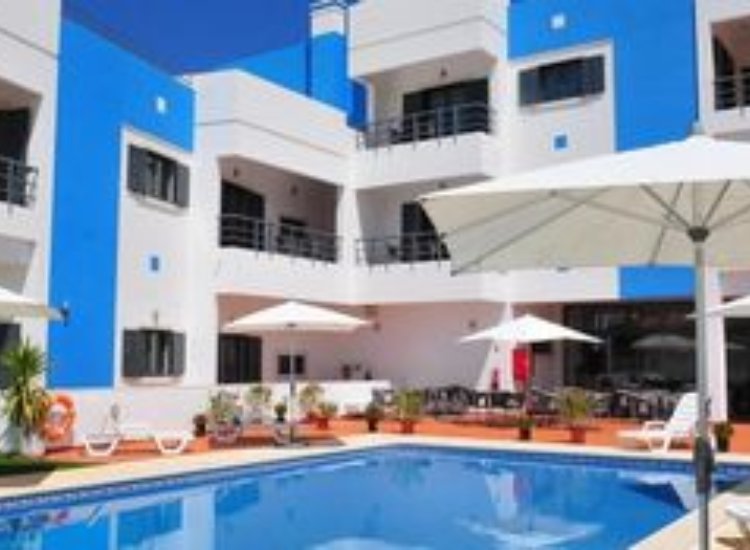 Vicentina Hotel (Aljezur)
O Vicentina Hotel is located in the heart of the Costa Vicentina, in Aljezur, within the Southwest Alentejo and Costa Vicentina Natural Park. A peaceful retreat surrounded by local charm and untouched nature. The hotel offers well-equipped T1 apartments, studios, twin and double rooms, all designed for a comfortable stay in a warm and welcoming atmosphere.
-
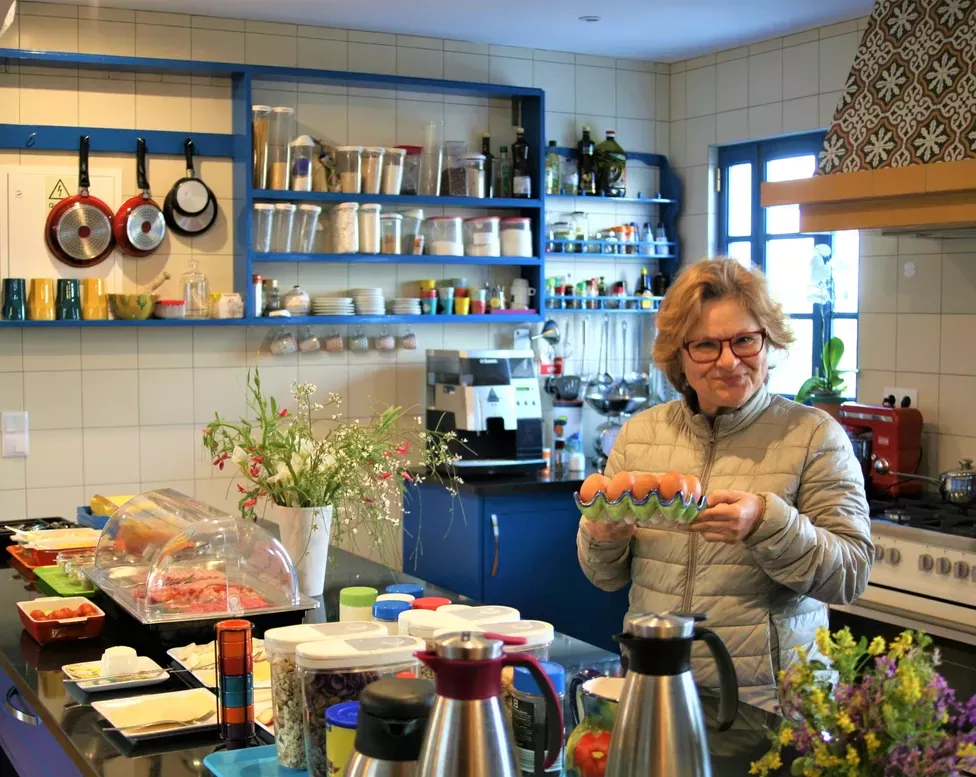 Pension Pensâo das Dunas (Carrapateira)
Pensão das Dunas is a colourful guesthouse that offers simple and compact rooms but a spacious outdoor patio and a shared kitchen, creating a sociable and welcoming atmosphere. The property is run by owners who have been involved with the Rota Vicentina since its early days and are responsible for maintaining the waymarking of the trail sections around Carrapateira, making it a particularly special stop for walkers.
-
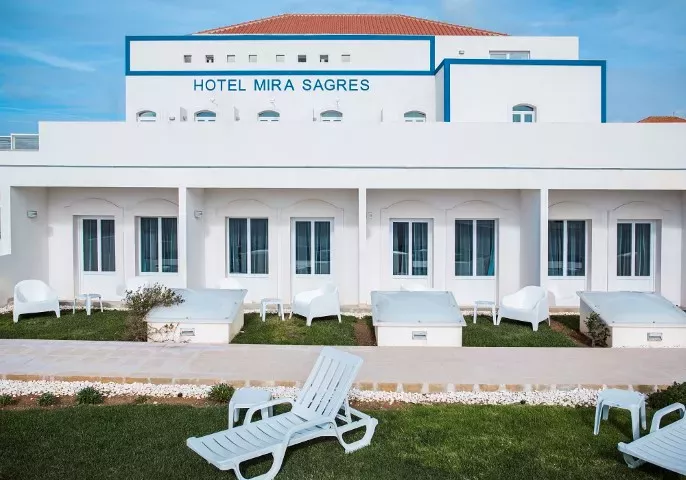 Hotel Mira Sagres (Vila do Bispo)
Hotel Mira Sagres is a hotel inspired by traditional Portuguese architecture, carefully integrated into the historic character of Vila do Bispo. While preserving the façades of the original building, it offers comfortable and modern accommodation, with rooms decorated in blue tones.
-
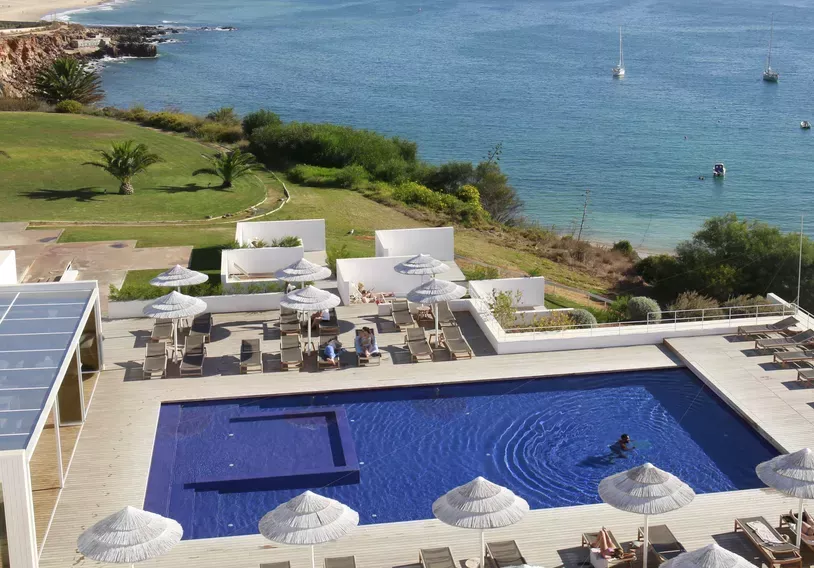 Hotel Memmo Baleeira (Sagres)
Hotel Memmo Baleeira**** is a contemporary design hotel overlooking the sea and Baleeira Harbour. Combining modern comfort with a privileged coastal setting, it is the most upscale accommodation featured on this tour and an excellent place to relax. We will normally request rooms with partial sea views whenever possible; full sea view rooms are available on request.
-
 Hotel Marina Rio (Lagos)
Hotel Marina Rio*** is a family-run hotel overlooking Lagos Marina, just a short walk from the historic centre. Combining a peaceful location with easy access to the town’s restaurants, shops and attractions, it offers a comfortable and welcoming base for exploring Lagos and the Algarve coast.
PRACTICAL INFO

When to go?
The Fisherman’s Trail can be walked year-round, but spring and autumn generally offer the most comfortable conditions. In summer, especially from late June to late August, temperatures can be very high. While beaches are never far away, there is little shade along the route, so it is important to carry plenty of water, food and sun protection during the longer stages.
By mid-October, the season becomes quieter and the trails are less crowded. From November onwards, you can enjoy a much more peaceful experience, although some restaurants, cafés and other tourist services may have reduced opening hours or be closed.

Nearest airports to fly to are Lisbon airport (LIS) and Faro airport (FAO).

Arrival in Aljezur
From Lisbon airport: Take a bus from Lisbon Airport to Sete Rios bus station. From there, take a Rede Expressos bus to Sagres that will take you to Aljezur. Total travel time is approx. 5 hours, depending on connections.
From Faro airport: First you take a shuttle bus from Faro airport to Faro bus station (Terminal Rodoviario – Vamus). The take a bus from redeExpressos to Aljezur (35 mins).
Departure from Lagos
To Lisbon airport: From Lagos you can travel directly to Lisbon in almost 4 hrs by public transport with Rede-Expressos (see link to website further up).
To Faro airport: you first can travel by bus with Vamus to Faro (line 57) in approximatley 2 hours (see link to website further up).
If you prefer to travel by train from lagos to Faro that is possible (see www.cp.pt), but you have to walk a bit to reach the shuttle bus to the airport; crossing the pedestrian bridge, then alonside the harbour)
Then you continue by bus or taxi to Faro Airport.
Optional airport transfers
Private taxi transfers can be booked from/to the airport (Lisbon-LIS or Faro-FAO) through S-Cape Travel. Prices on request

Navigation app and tracks
Included in your booking is access to the tour on our navigation app. You can also download the tracks and follow the routes on your own device, but we recommend checking the app for the day-to-day itinerary.

Weather & Climate
Why Autumn Is the Best Time to Walk the Fishermen’s Trail? Read here our opinion!
| Month | Temperature (ºC) | Hours of sunshine | Rain (%) |
| Feb | 9–17 °C | 6 h | 30 % |
| Mar | 10–19 °C | 7 h | 25 % |
| Apr | 11–21 °C | 8 h | 20 % |
| May | 13–24 °C | 9 h | 15 % |
| Jun | 16–27°C | 11 h | 10 % |
| Jul | 18–29 °C | 12 h | 5 % |
| Aug | 18–28 °C | 11 h | 5 % |
| Sep | 18–27 °C | 9 h | 10 % |
| Oct | 15–24 °C | 8 h | 20 % |
| Nov | 12–20 °C | 6 h | 25 % |

How to Book & Our Terms
When you make a booking, we first check availability and do our best to confirm all your chosen options. Once everything is confirmed, we’ll contact you. If something isn’t available, we’ll get in touch to discuss alternative options with you.
You can note any preferences or questions in the comments box at the final step of booking. For full details, please see our Terms & Conditions and How to book pages.
WHAT'S INCLUDED
Included
- 7 nights' accommodation with breakfasts
- Luggage transport on days 4, 5 and 7
- Transfers according to programme, on days 2, 6 and 7
- Digital detailed route notes and maps in English
- Access to the trip on GUIBO navigation app
- 24-hour telephone assistance
Not included
- Transport to first/ from last accommodation
- Other meals
- Optional taxi transfers to shorten walks on days 2, 6 and 7
- Transfers by public transportation
- Personal expenses such as drinks, phone calls, extra transfers, etc.
- Tourist Tax
- Any items that have not been specifically mentioned in the program
Extras
- Single Room Supplement(s)
- Solo Traveller Supplement
- Additional night/s can be booked at any of the standard accommodations along the way
- Shipment of printed documents to the first accommodation
REVIEWS
Absolutely. This southern region of Portugal is known for its beachfront bars and restaurants, where you can enjoy fresh fish and seafood while supporting local fishermen. Along the route, you'll also find small shops, cafés and bakeries selling regional specialities, including Queijinhos de Figo and Figos Cheios, two traditional sweets made primarily from figs.
Yes. On a couple of sections where the coastal route follows beaches and small coves, you'll need to take the tide times into account when planning your day. However, there's no need to worry if you arrive at high tide, as there is always an alternative route available.
You can check tide times on the official Portuguese Hydrographic Institute website: www.hidrografico.pt/m.mare
On this southern section of the Fishermen’s Trail, we have no doubt about where to spend an extra day: Carrapateira. This lively village has a good range of services and two beautiful beaches within walking distance, making it the perfect place for a relaxing day off the trail. The accommodation, Pensão das Dunas, is simple but very welcoming and offers an authentic Portuguese experience.
The Fishermen’s Trail can be enjoyed throughout much of the year, but as we explain in our blog article, we firmly believe that autumn is the best time to experience it. Temperatures are pleasant for walking, the summer crowds are disappearing, and the Atlantic coastline often remains warm enough to enjoy the beaches.
The trail follows the wild Atlantic coast and passes several surfing beaches known for their waves. However, you'll also come across more sheltered beaches and coves where both locals and visitors enjoy swimming. Don't forget to bring your swimwear!
Why book with S-Cape?
Local experts
We know the trails inside out - we've walked them all, so we can guide you.
Travel your way
Go when you want, with whoever you choose - we take care of the rest.
Our Navigation App
Our app has every route mapped, with daily details and extra info for a seamless journey.
OTHER TOURS YOU MIGHT ALSO LIKE:


Recently viewed:


8-day Fishermen's Trail Walking Tour: from Arrifana to Lagos







Contact
-
Edificio Sovega bajo, Crta General s/n
33554 Arenas de Cabrales
Asturias , Spaininfo@s-capetravel.eu
+34 (0) 985 846 455
UK call free 0800 707 44 35 -





Opening hours: Mon-Fri 9:00am – 6:00pm (CET)
Opening hours: Mon-Fri 9:00am – 6:00pm (CET)