






Route from Fuente Dé to Collado Jermoso mountain hut (Picos de Europa)
The route from Fuente Dé to the Collado Jermoso refuge in the Picos de Europa links the León side of the massif with the Valdeón Valley area—a quieter, less crowded region often considered one of the hidden gateways to the central massif.
While many hikers access the Picos via Asturias—following the famous Cares route, visiting the Covadonga Lakes, or starting from Pandébano—the León side offers several excellent entry points. These trails vary significantly in difficulty and technical challenge, ranging from the effortless ease of a cable car ride to a demanding 1,200-metre climb over 5 km (3.1 miles) on foot.
The route to Collado Jermoso (also known as the Diego Mella Refuge, named after the visionary who proposed its construction) is of moderate difficulty. Because it culminates at a fully equipped mountain refuge, hikers can comfortably complete the ascent in one day and descend the next. This overnight option allows visitors to experience the legendary sunset from the viewpoint—a bucket-list ritual for everyone who makes the climb.
Route summary
As noted above, this route is classified as moderate due to its distance and significant elevation gain (1,384 m), but it features no technical climbing or sections exposed to dangerous vertical drops.
| Usual starting point | Fuente Dé car park (Cantabria). Google Maps: https://maps.app.goo.gl/ZkqVu9Via |
| Distance | 9 km (5.6 miles) [one way] / 18 km (11.2 miles) [round trip] |
| Altitude of the refuge | 2,064 m |
| Elevation gain | 1,384 m |
| Estimated time | 4h 30 mins (ascent only) |
| Terrain | Mountain trail, loose stones in some sections, not very technical |
| Best time of year | Late spring until October to avoid snow |
| Nearby towns | Espinama, Cordiñanes de Valdeón, Posada de Valdeón |
The alternative trail starting from the village of Cordiñanes is also well-known, though it is highly demanding, with a massive elevation gain packed into just a few kilometres.
Because it involves both a punishing ascent and a particularly grueling descent, it is strictly recommended for experienced mountaineers.
Conversely, approaching Collado Jermoso from the upper station of the Fuente Dé cable car is uncommon. Although this option saves several hundred metres of climbing, there is no well-defined or safe path leading directly from the station to the refuge.
The route in pictures
-
 Having a drink at the best table in the mountain hut
 -
 The Fuente Dé parking area down below
 -
 Arrival at the mountain hut
 -
 Enjoying a picnic in the Vega de Liordes Valley
 -
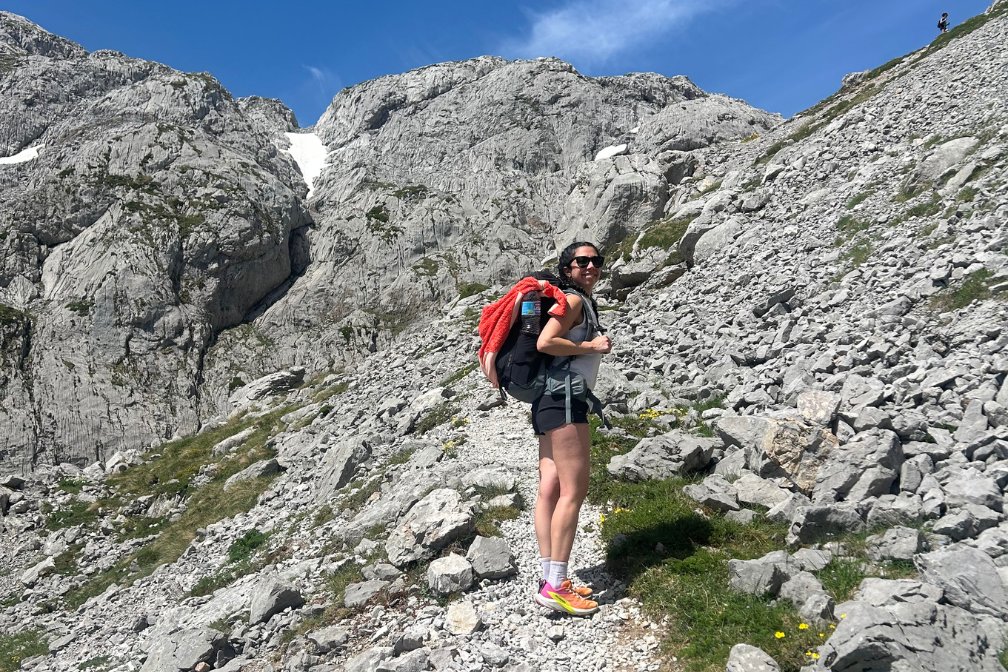
 Ascent along a rocky trail
 -
 Next to a snowfiled
How to get there and where to park
Getting there is straightforward: the road simply ends at Fuente Dé. Upon arrival, you will find only the Parador de Fuente Dé, the cable car station, and a large, free car park that remains open year-round. During the peak summer season and on holiday weekends, it is highly recommended to arrive early to secure a spot.
Once you park, the trailhead is just a few metres away. Take a moment to enjoy the immediate mountain views and watch the cable car glide up the sheer rock face before you begin.
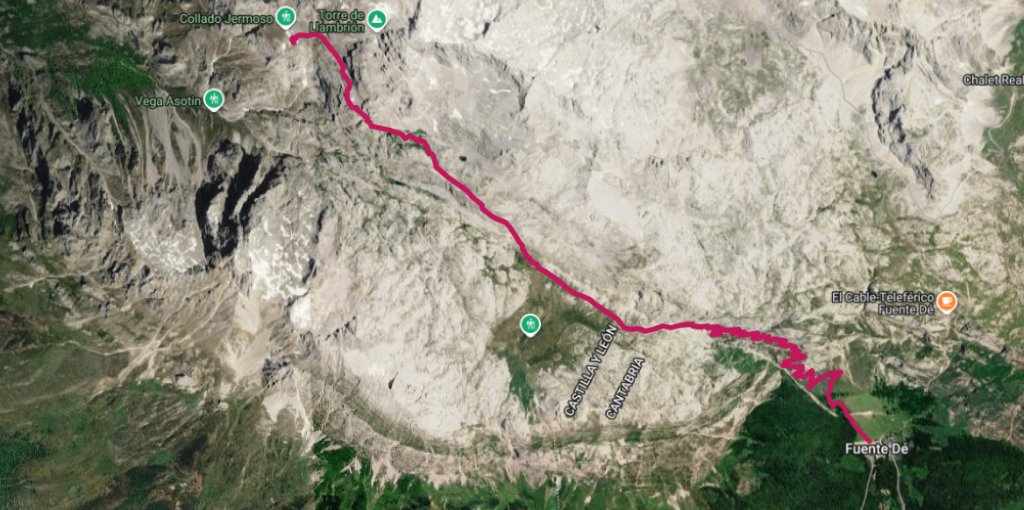
The climb to Collado Jermoso: step by step
Part One: the meadow, the woods, and the turn-off
From the Fuente Dé car park, cross the open meadow—directly beneath the cable car lines—towards the woodland on the left. The flat terrain is gentle, but do not let it fool you; directly ahead, the sheer limestone walls of the Picos rise dramatically, featuring a small waterfall that marks the source of the River Deva.
Shortly after clearing the woods, the ascent begins. After gaining just a few metres of altitude, look out for a sharp left turn-off. It is easy to miss, as the signpost sits slightly back from the actual junction. Turn left here, following the signs for the "Tornos de Liordes". If you continue straight instead, you will find yourself on the path climbing towards the upper cable car station (known locally as "El Cable").
The zigzag: two hours of steady climbing
From this point forward, the trail becomes relentlessly steep. You will tackle a continuous, sweeping zigzag that gains 700 metres of elevation over 4 kilometres (2.5 miles), forcing you to settle into a steady, sustainable pace.
For nearly two hours, the climb is unyielding. There are no flat sections or breaks in the incline—just pure uphill hiking. As you climb higher, the car park shrinks below, and the lush, green forests of the Liébana Valley open up into a spectacular panorama.
While waymarking is sparse, the path itself is so heavily trodden and obvious that there is no risk of losing the trail.
Vega de Liordes: the unexpected oasis
Suddenly, the landscape transforms.
After the grueling zigzag, the Vega de Liordes emerges like a hidden paradise hidden among the crags. This wide, vibrant green meadow is entirely ringed by towering limestone peaks, creating a stunning amphitheatre.
This is the perfect spot to take a well-deserved break, have a bite to eat, and recover. With the uphill grind paused and the car park hidden from view, you will truly feel immersed in the heart of the high mountains.
The trail continues to the right, skirting the edge of the meadow, until it reaches a signpost pointing in three directions: Collado Jermoso, Remoña, and Fuente Dé. Follow the right-hand path toward Collado Jermoso, which offers a gentler, more gradual incline.
Towards Las Colladinas
Leaving the Vega de Liordes behind, the path narrows as you traverse a slightly more exposed rocky stretch for about 20 minutes. While there are no vertical drops, the sheer scale and height may feel a bit airy for anxious hikers.
This section offers incredible vantage points for photographing the stark, grey limestone peaks. The environment shifts completely here—vegetation fades away, and the terrain becomes strictly alpine and rocky.
Just before the final push, you will encounter a surprising patch of green pasture isolated in the sea of stone. From here, the final short ascent to Las Colladinas begins, bringing you to the threshold of your destination. Except in the hottest summer months, you are likely to encounter a few lingering patches of snow here.
The final stretch: the refuge in sight
Suddenly, the refuge comes into view in the distance, and the heavy climbing is officially over. Seeing the hut right in front of you can make the final stretch feel deceptively long, but every step brings you closer.
While the incline has leveled out, watch your step: loose scree requires careful footing, and you should keep an eye on the slopes above. It is incredibly common to spot chamois (mountain goats) grazing on the cliffs. They are entirely unbothered by hikers but can easily dislodge loose rocks.
Finally, you will arrive at the Collado Jermoso refuge, spectacularly perched on the cliffside. It takes only one glance at the panoramic views to understand why this spot is so revered. Greet the wardens, grab a cold drink, and if you are feeling brave, enjoy it at the lower outdoor table balanced right on the edge of the drop.
The alternative route from Cordiñanes: shorter but tougher
While the approach from Fuente Dé is long and steady, the climb from Cordiñanes (Valdeón Valley) is a pure vertical challenge. There is no gentle warm-up. From the bottom of the valley floor, the trail launches upward almost immediately, forcing you to conquer over 1,000 metres of elevation gain in a very short distance.
The path cuts through rugged, rocky terrain, offering a profound sense of isolation. It is a relentless, demanding ascent—and an even tougher, knee-jarring descent. This 5 km (3.1 miles) route is strictly recommended for experienced trekkers with excellent physical fitness.
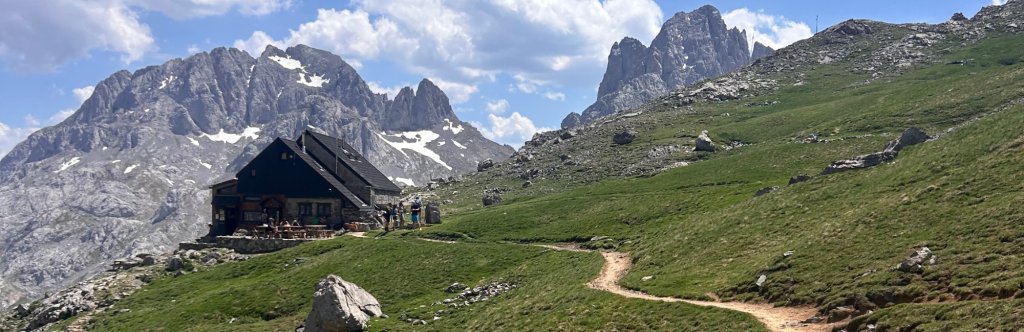
The Collado Jermoso Mountain Hut: facilities and bookings
- Capacity: 30 beds in bunk beds, divided into four dormitories
- Opening dates: From May to October (Official season: 1 April – 31 October)
- Catering: Breakfast, lunch, dinner (set menu), and bar service
- Facilities: Toilets, hot showers (for overnight guests only, token-operated water control)
- Warden: Emilio Huerta Alonso
- Contact: 636 998 727 / refugio@colladojermoso.com
- Bookings: Book mountain huts via the official portal
- Google Maps Location: https://maps.app.goo.gl/bUxYobdG26PzoBS59
- WebCam: https://www.youtube.com/watch?v=WOOJaQmQ_u4
Rates (2026)
| Federation Members | Non-Members |
| Breakfast: €7 | Breakfast: €7.50 |
| Lunch/Dinner: €18 | Lunch/Dinner: €20 |
| Packed Picnic: €14 | Packed Picnic: €14 |
| Overnight Stay: €12.50 | Overnight Stay: €19 |
| Overnight Stay (Under 14s): €8.50 | Overnight Stay (Under 14s): €8.50 |
| Hot Shower (5 mins): €3.50 | Hot Shower (5 mins): €3.50 |
.png)
Best time: sunset
As evening approaches, you will notice guests making their way up the hillside directly behind the refuge. Grab a drink from the bar and join them.
After a quick 5-minute walk to the ridge, the views open up spectacularly over the western massif. If conditions are right, you will witness a breathtaking sunset over a rolling sea of clouds, with the highest peaks piercing through the mist. It is the ultimate reward for the day's hard work.
Practical information
Recommended equipment
Footwear: Sturdy hiking boots are non-negotiable. The terrain is purely alpine, rocky, and full of loose scree.
Water & Sun Protection: You must carry plenty of water. There are no water sources along the trail until you reach the public tap at the refuge, and there is virtually no shade. On hot days, ample hydration is critical.
Overnight Stays: If you are sleeping at the refuge, a sheet sleeping bag or sleeping bag liner is mandatory. The refuge provides blankets, pillows, and indoor slippers (outdoor boots must be left in the entryway).
Weather conditions
The Picos de Europa dictate their own weather; a perfectly sunny morning can rapidly give way to heavy mountain rain. Dense fog is also common, particularly in the early morning. While it often clears quickly, safety comes first: if thick fog rolls in and obscures the trail, stop immediately and wait for it to lift.
Wildlife
The high rock faces mean you will encounter little to no livestock, but native wildlife is abundant. Keep an eye out for soaring birds of prey, alpine newts in seasonal pools, and mountain reptiles. Be especially mindful of chamois grazing above you in rocky corridors, as they can inadvertently trigger rockfalls.
Dietary preferences and allergies
The refuge kitchen does a fantastic job catering to different dietary needs, but you must notify them of restrictions (like vegetarianism or allergies) well in advance when booking. Because it is a remote mountain hut rather than a standard restaurant, the wardens cook a single, hearty set menu served to all guests simultaneously.
Plan your trip carefully
Essential Pre-Hike Checklist
Check the Weather: Mountain weather in Picos de Europa can change rapidly. Always check local high-altitude forecasts before leaving Sotres.
Cash is King: While some refuges accept cards, connectivity can be unreliable in the mountains. Carry enough cash for your meals or drinks.
Leave No Trace: You are hiking through a protected National Park. Bring a small bag to pack out all your trash, including organic waste like fruit peels.
Tips for Staying Overnight at the Refuge
Pack a Sheet Sleeping Bag: The refuge provides blankets and mattresses, but a lightweight liner or sheet sleeping bag is mandatory for hygiene.
Bring Headlamps and Earplugs: Dormitories are shared. A headlamp helps you navigate at night without waking others, and earplugs ensure a good night's sleep.
Respect Quiet Hours: Mountain etiquette dictates quiet hours starting around 10:00 PM to accommodate hikers waking up at dawn.
FAQs
How long does it take to walk from Fuente Dé to Collado Jermoso? Expect the ascent to take approximately 4.5 hours, depending on your physical fitness and pacing.
Is the route to Collado Jermoso difficult? It is rated as moderate. The difficulty stems entirely from the sustained elevation gain and distance; the trail itself is well-defined and requires no technical climbing skills.
Will I find water along the route? No. There is no water available between the starting car park at Fuente Dé and the refuge itself. Bring plenty of water to get you through the exposed, unshaded climb.
Can it be completed as a day hike? Yes, a round-trip in a single day is entirely possible for fit hikers. However, most people prefer to spend the night at the refuge to experience the famous sunset and enjoy a leisurely descent the following morning.
Is the route dangerous? Not inherently, but standard mountain safety applies. Watch your footing on sections with loose scree, be prepared for open mountain heights, and stay alert for loose stones dislodged by chamois near the end of the trail.
What do they serve for dinner and breakfast at the refuge? While the menu changes, a typical dinner consists of a hearty pasta salad starter, followed by meat fillets in sauce with a side of mashed potatoes, and homemade sponge cake for dessert. Breakfast is simple, fuel-focused, and sufficient: coffee, milk, biscuits, fresh bread, butter, jam, olive oil, and crushed tomatoes.






Contact
-
Edificio Sovega bajo, Crta General s/n
33554 Arenas de Cabrales
Asturias , Spaininfo@s-capetravel.eu
+34 (0) 985 846 455
UK call free 0800 707 44 35 -





Opening hours: Mon-Fri 9:00am – 6:00pm (CET)
Opening hours: Mon-Fri 9:00am – 6:00pm (CET)