






The Most Beautiful Villages & Hamlets in the Picos de Europa
The Picos de Europa is one of northern Spain's most spectacular mountain destinations - a region where dramatic limestone peaks tower over deep valleys, ancient stone hamlets, and lush green pastures grazed by cows, goats, and chamois.
Whether you're planning a hiking trip, a scenic road journey, or a peaceful rural escape, the Picos are full of villages that capture the essence of traditional Asturian and Cantabrian life.
Below are the most scenic villages in the Picos de Europa, each offering unforgettable landscapes, local culture, and easy access to some of the best walking routes in the national park.
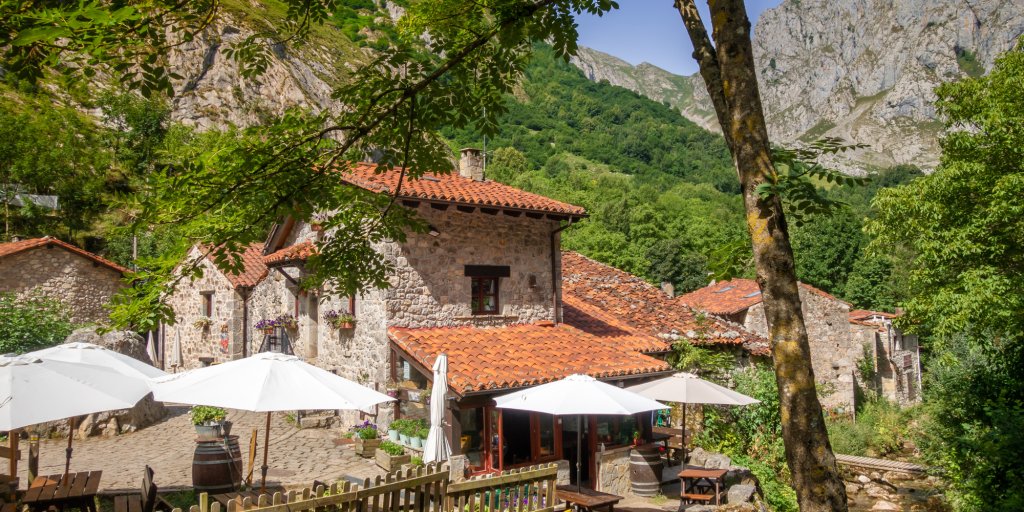
Bulnes hamlet, in Picos de Europa
Bulnes - Remote, Roadless & Remarkable
Bulnes is one of the most iconic hamlets in the Picos de Europa. Nestled deep inside a gorge, it was once accessible only by a steep footpath. Today, you can still hike in - or take the funicular - but the sense of isolation remains.
From Poncebos, where the famous Ruta del Cares also begins, you can either take the seven-minute funicular, or walk the five kilometres and 800-metre ascent along a beautiful trail. Once you arrive, you'll find restaurants with terraces and very little else - which is exactly the point.
For families or anyone wanting to skip the climb, a good option is to take the funicular up and walk back down to Poncebos.
More information: the funicular runs between 10:00 and 20:00 (18:00 in low season); €18 one way, €22 return, with discounts for under-12s; www.alsa.com/bulnes-funicular
Need to know: In high season (mid-July to mid-September), walk a little further up to Bulnes de Arriba for a more relaxed atmosphere, fewer crowds, and additional lunch options.
During busy periods, it's also worth parking in Arenas de Cabrales and taking the bus to Poncebos - arriving by car risks being turned back due to lack of parking.
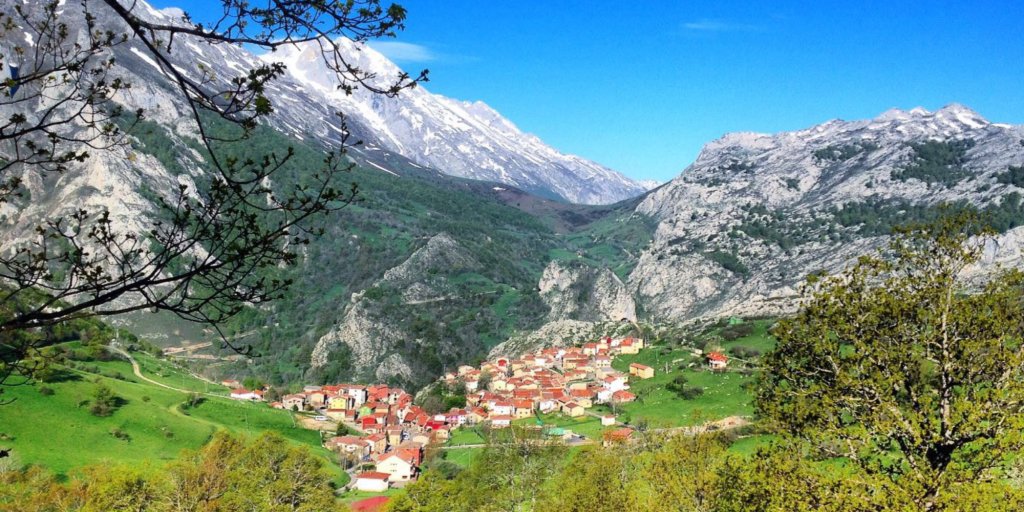
Village of Sotres
Sotres - A High-Mountain Gem
At +1,000m altitude, Sotres is one of the highest villages in Asturias and arguably the most visually striking. It has a mining past, but today its main activities are tourism, livestock farming, and the production of Cabrales cheese.
The road up to Sotres is an experience in itself: it begins through forest and past ancient stone walls before opening suddenly onto sweeping panoramic views of sharp limestone ridges and high-altitude pastures.
Home to around 110 people in winter, Sotres offers 360-degree mountain views and makes an excellent base for hikers exploring the Central and Eastern Massifs.
Need to know: The perfect Sotres day starts with a morning walk (see route below), followed by a well-earned drink at the characterful La Gallega bar.
In the afternoon, visit the Quesería Main cheese factory, where Javi and Jessica lead guided tours of the traditional Cabrales cheese-making process - including a cave visit and a tasting of cheese and cider (https://quesosdecabrales.es).
If the skies are clear, end the day stargazing: this area has very low light pollution, and you just have to walk a short distance from the village to find an ideal spot.
Walking route: A circular walk through the Eastern Massif, an area shaped by 19th-century mining. Expect a limestone landscape of sharp ridges, deep depressions, and vertiginous shafts, with bright alpine flora and excellent chances of spotting chamois, vultures, and eagles amongst other wildlife.
- Distance: 12.5 km / 8 miles
- Duration: 5.5 hours
- Ascent/descent: 550 m up, 840 m down
- Optional extension - ascent to Pico San Carlos: +6 km / 4 miles, +3 hours, +500 m ascent and descent
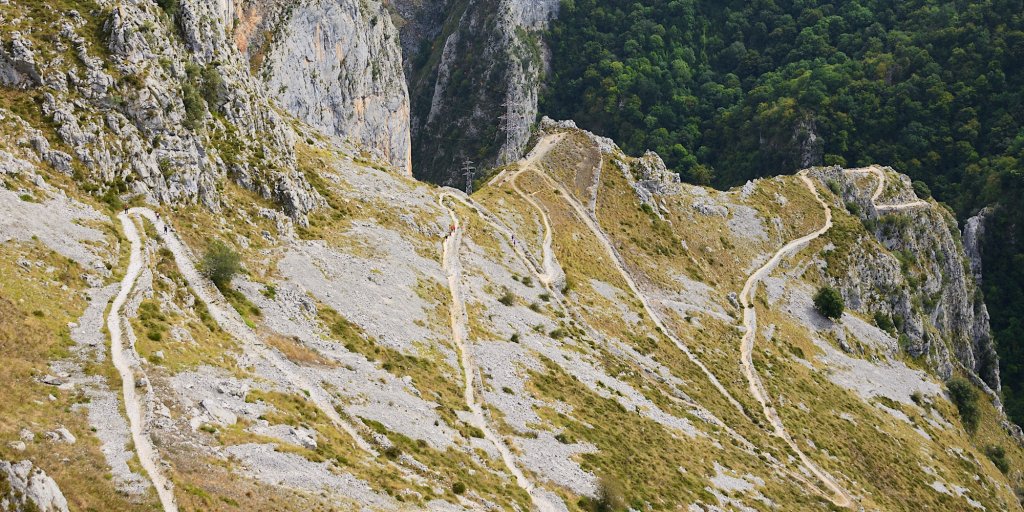
Canal de Urdón, Tresviso
Tresviso - A Long Way Off the Beaten Track
Tresviso is one of the most remote villages in the region - technically in Cantabria, but with its only road access coming from Asturias. Heading up the road towards Sotres, past the 1,000-metre mark, you cross the border between the two regions at the Hitu Escarandi mountain pass, from which the road continues to Tresviso.
If you're not driving, the alternative is to climb the Canal de Urdón (picture above) - a dramatic route that gains over 800 metres in less than five kilometres, switchbacking relentlessly upward. Not recommended for anyone with a fear of heights.
Need to know: Even on a sunny day, keep your expectations flexible - the weather can be mixed, and Tresviso is frequently shrouded in mist, which can obscure the views entirely.
That said, it’ll never be an entirely wasted journey. Wandering through the village, you're likely to encounter geese and guinea fowl roaming freely through the streets, which goes a long way to lifting the mood on a foggy afternoon.
Explore the surrounding area with our hiking route guide from the Urdón Gorge to Tresviso.
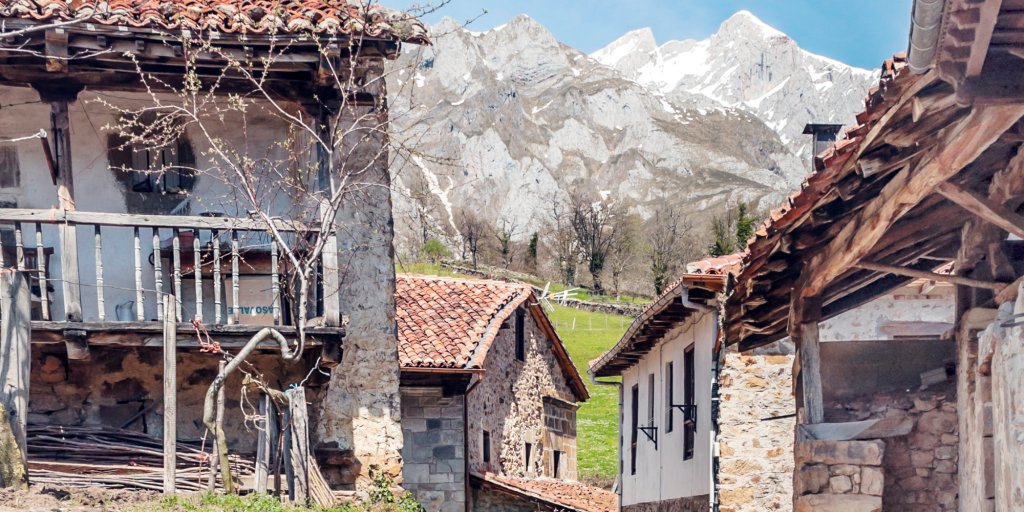
Old stone houses in Mogrovejo hamlet
Mogrovejo - A Medieval Marvel Beneath the Ándara Massif
With its medieval stone tower, rustic barns, and sweeping meadows set against the dramatic backdrop of the Ándara Massif, Mogrovejo is frequently listed among the most beautiful villages in Spain. It's a postcard of rural life - quiet, authentic, and ideal for travellers seeking scenery without the crowds.
The village's most striking feature is its 13th-century tower - once the seat of the lords of Mogrovejo, who at their peak held the power to personally appoint the mayors of surrounding villages. To reach it, follow the CA-185 regional road near the pretty town of Potes and look for the turning to Mogrovejo.
Need to know: This village of just 45 inhabitants served as the filming location for Heidi: Queen of the Mountain (2016). It was chosen to stand in for an Alpine setting - and it's easy to see why: the green meadows and mountain backdrop could just as convincingly be Switzerland as northern Spain. The chalet built for the film no longer exists.
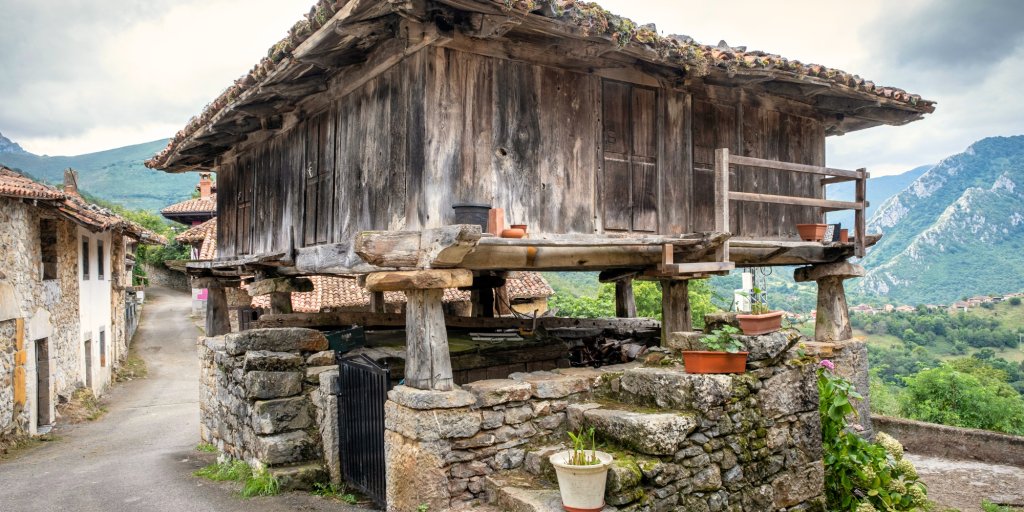
An hórreo construction in Asturias
Santa Marina de Valdeón - From Another Age
This hamlet of just over 50 inhabitants is definitely worthy of a visit. It’s the oldest settlement in the Valdeón valley - a place that once had a small monastery housing around ten monks, though nothing of it remains today.
What still stands, and what draws visitors here, are twelve hórreos: the traditional raised granaries typical of northern Spain, designed to store grain and food safely out of reach of rodents. Walking through Santa Marina de Valdeón feels, more than almost anywhere else in the Picos, like stepping back in time.
Need to know: What is an hórreo? Found throughout Galicia, Asturias, Cantabria, and León, hórreos are the raised granaries that punctuate the rural landscape of northern Spain - built in wood or stone on stone stilts to keep harvests dry, ventilated, and safely out of reach of rodents (https://en.wikipedia.org/horreo) .
Their origins stretch back at least to Roman times, with first-century BC writers documenting elevated, ventilated grain stores used by the peoples of northwest Iberia - making the twelve examples still standing in Santa Marina de Valdeón a remarkably intact piece of living heritage.
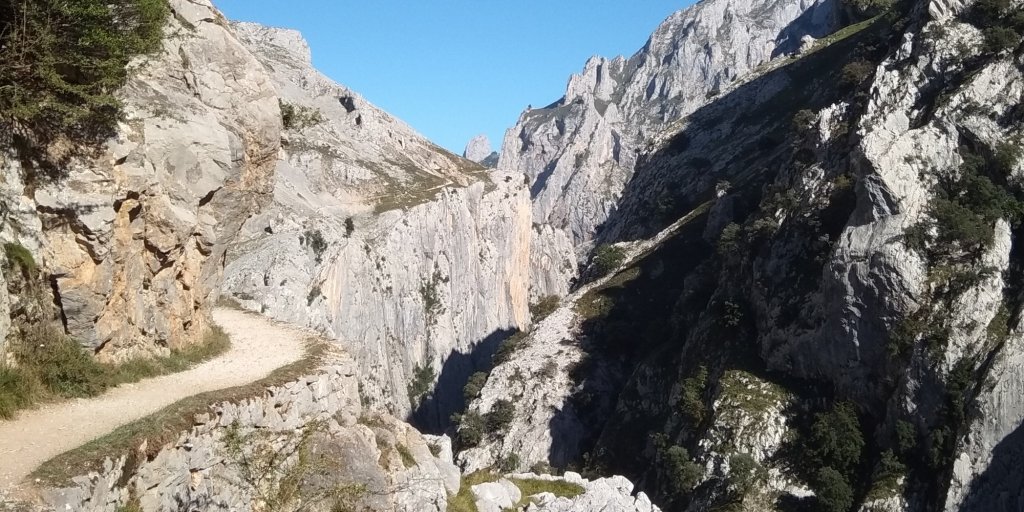
The Cares Gorge or Ruta del Cares, between Caín and Poncebos
Caín - The Gateway to Cares Gorge
On the León side of the Picos, Caín sits at the southern mouth of the legendary Ruta del Cares. The village is small and services are limited - though accommodation and restaurants are available - but the scenery is spectacular.
This is another of the Picos' remote dead-end villages where the road simply stops. In July and August, however, the volume of walkers arriving via the Cares route means it's far from quiet. Used as a base, Caín gives immediate access to several spectacular hiking routes.
Need to know: If the full Ruta del Cares feels too long, too steep, or too exposed, Caín is actually the ideal starting point for a shorter taste of it.
The stretch closest to Caín is widely considered the most dramatic section of the entire route - and it's also where the gorge is at its shallowest, the river closest, and the exposure least severe, making it suitable for families and less confident walkers. Just a little over two kilometres from the village, you'll already understand why this trail is one of Spain's most celebrated walks.
If you're planning to go hiking in the area, don't miss our guide to the best walking routes in the Picos de Europa.
Marketing, Web & Design
After studying in my hometown of Barcelona and spending several years abroad, I relocated in 2018 to Cabrales, a beautiful rural area in Northern Spain. I invite you to check out some photos of Cabrales to see the incredible views we enjoy from our office!
After a few years in reservations, I now manage the website and marketing for S-Cape Travel, where I handle design tasks, blog writing, and attend specialized travel fairs.
Most popular








Contact
-
Edificio Sovega bajo, Crta General s/n
33554 Arenas de Cabrales
Asturias , Spaininfo@s-capetravel.eu
+34 (0) 985 846 455
UK call free 0800 707 44 35 -





Opening hours: Mon-Fri 9:00am – 6:00pm (CET)
Opening hours: Mon-Fri 9:00am – 6:00pm (CET)