






Seven Cycling Holidays You Can Do by Train
Train travel is having a moment. Whether for laudable eco reasons, a 'slow travel' desire or as a result of possible flight uncertainty, people are considering their no fly holiday options.
A cycling holiday that begins at a train station - with countryside sliding past the window and a bike in the luggage van - turns out to be a different proposition entirely from one that starts in a departure lounge.
The seven cycling holidays below can all be reached without an airport. Each starts at a railway station - or within easy reach of one. The cycling is the point. The train is a very good way to get there.
Girona, Spain - Volcanoes, Vines and a City Made for Cycling
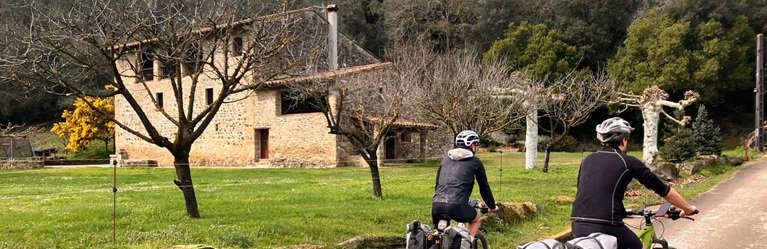
Why go?
Girona is the kind of cycling base that professional teams choose for a reason. The city's medieval core - Jewish quarter, cathedral rising above the Onyar, coloured houses reflected in the river - is one of Catalonia's most beautiful, and it sits at the centre of a province that offers more variety than almost anywhere else in Europe.
The route follows the Carrilet Greenway, a former railway line converted to cycling path, and sections of the Pirinexus network, linking the Mediterranean coast with fertile plains and forested hills inland. Day two takes riders to the Costa Brava at Sant Feliu de Guíxols. Days four and five head north through rice fields and orchards to Figueres, home of the Dalí Theatre-Museum (Salvador-dali.org), and then to Lake Banyoles - Catalonia's largest natural lake (Wikipedia.org), and the venue for the rowing events of the 1992 Barcelona Olympics.
The final two days are among the most distinctive. The route climbs into the Garrotxa Volcanic Zone Natural Park (Spain.info), where a short detour on foot takes riders inside the Santa Margarida crater - a dormant volcano with a small chapel at its centre. The last day follows the Carrilet back to Girona, predominantly downhill.
The route:
A circular tour that begins and ends at Girona station, so there are no one-way logistics to manage. The Carrilet Greenway carries riders for much of the trip - traffic-free, well-surfaced, gently graded on most stages. Day seven is the longest at 59km but also the most forgiving on gradient.
Details:
- Duration: 8 days
- Route: Circular from Girona
- Distance: ~261km over 6 cycling days
- Difficulty: Easy-moderate
- Season: April–October
- From: €1,034 per person (double room)
See our Girona cycling tour.
Getting there by train:
From the UK: Eurostar London St Pancras to Paris (2h20), then a direct TGV INOUI service from Paris Gare de Lyon to Girona - there are two direct services daily and a same-day journey is possible on the afternoon departure, arriving in the early evening. Connection timing is tight so verify specific trains on sncf-connect.com before booking (Seat61.com).
From the Netherlands: Eurostar Amsterdam to Paris (3h20), then TGV INOUI direct to Girona. The timing makes a single-day journey tight - a night in Paris is the more comfortable option (Seat61.com).
From Germany: ICE or TGV from Frankfurt or Cologne to Paris (around 3h40 from Frankfurt), then TGV direct to Girona. An overnight in Paris is almost certainly needed, making this a genuinely two-day arrival journey (Seat61.com).
Nevers, France - The Loire, All 800km of It
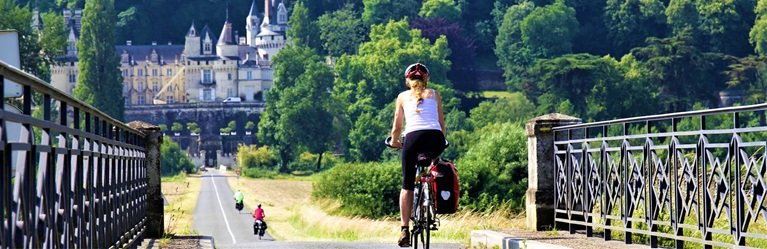
Why go?
The Loire à Vélo (Loireavelo.fr) is the longest dedicated cycle route in France - 800km from the Burgundian town of Nevers to the Atlantic at Saint-Nazaire. This route follows it in full, which means 13 days of cycling through the heart of the country that invented the unhurried long lunch.
The highlights accumulate steadily. Day three passes through Sancerre wine country - vineyards on steep hills, Sauvignon Blanc at a lunchtime detour, goat's cheese from Chavignol. Then come the great châteaux of the middle reaches: Chaumont, Amboise and the gardens at Villandry, Saumur high above the river, and Orléans - the city liberated by Joan of Arc. On day eight, riders pass through Clos-Lucé, the manor house where Leonardo da Vinci spent his final years as a guest of the French crown (Loirevalley-france.co.uk).
At Briare, the route crosses the Pont-Canal (Wikipedia.org) - a 662-metre aqueduct built by Gustave Eiffel's company in the 1890s, after the Tower was complete, carrying the canal over the Loire on fourteen stone piers. It held the record as the longest navigable aqueduct in the world for over a century.
Geography and ride are broadly flat, with the river doing most of the navigational work. Daily distances range from 27km to 64km. The dedicated Loire à Vélo path carries riders on smooth, well-signed surfaces throughout - mostly away from traffic, always close to the water.
The route:
A true point-to-point from Nevers to the Atlantic - one of the few tours on this list with the sea as its endpoint. The tour can be booked in shorter sections if the full 15 days is not available.
Details:
- Duration: 15 days
- Route: Nevers to St-Brévin-les-Pins (near Saint-Nazaire)
- Distance: ~658km over 13 cycling days
- Difficulty: Easy-moderate
- Season: April–October
- From: €1,859 per person (double room, standard hotels)
See our cycling tour of the Loire Valley from Nevers to St Brevin-les-Pins.
Getting there by train:
From the UK: Eurostar to Paris (2h20), then Intercités from Paris Gare de Bercy to Nevers (approximately 2 hours) - a comfortable single-day journey. Important: Nevers trains depart from Gare de Bercy, not Gare de Lyon; the two stations are close but distinct, and many travellers head to the wrong one (Seat61.com).
From the Netherlands: Eurostar Amsterdam to Paris (3h20), then Intercités to Nevers (approximately 2 hours). Doable in a day with a morning Eurostar - allow time for the cross-Paris change between Gare du Nord and Gare de Bercy (Sncf-connect.com).
From Germany: ICE or TGV Frankfurt to Paris Gare de l'Est (around 3h40), then cross Paris to Gare de Bercy (allow 45–60 minutes) for the Intercités to Nevers (approximately 2 hours). A long day from Frankfurt, but manageable with an early departure (Seat61.com).
Amsterdam to Brussels - Two Capitals, One Very Flat Week
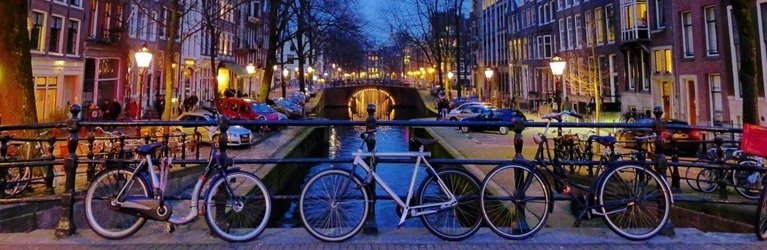
Why go?
This is the simplest train-access story on our list - and the flattest cycling. Amsterdam is a direct Eurostar destination from London, a short intercity from anywhere in the Netherlands, and a 2.5-hour ICE ride from Cologne. The tour begins in the city's UNESCO-protected 17th-century canal district (Unesco.org) and takes a week to reach Brussels. In between, the route passes pretty towns and villages, and through the kind of Dutch and Belgian landscape that made cycling a way of life rather than a sport.
There are plenty of highlights to keep an eye out for as you pedal along: medieval Gouda - hometown of the cheese and the syrup waffle; Kinderdijk, with its 19 historic windmills in a UNESCO-listed complex (Unesco.org); the Biesbosch, one of Europe's last freshwater tidal areas; Antwerp's magnificent Grote Markt and harbour quarter; and Leuven's medieval university streets before the final day rolls into Brussels.
The route is flat and traffic is low throughout - a combination of purpose-built cycling infrastructure, quiet back roads and towpaths. Daily stages rarely exceed 70km, and only the final approach to Brussels introduces any noticeable gradient.
The route:
A clean point-to-point from Amsterdam Centraal to Brussels Midi - both of which are Eurostar-served stations, making the return journey as simple as the arrival. 340km over six cycling days at a genuinely unhurried pace.
Details:
- Duration: 8 days
- Route: Amsterdam to Brussels
- Distance: ~340km over 6 cycling days
- Difficulty: Easy
- Season: May–September (Mondays only)
- From: €970 per person (double room)
See our Amsterdam to Brussels cycling tour.
Getting there by train:
From the UK: Direct Eurostar London St Pancras to Amsterdam Centraal in around 4h15–4h19 - one of the cleanest train-to-cycling connections on this list. Five daily direct services run in both directions since January 2026. Check schedules close to departure as ongoing station works around Amsterdam can occasionally affect weekend timetables (Seat61.com).
From the Netherlands: Amsterdam Centraal is the tour's starting point. Intercity trains connect Rotterdam (30 min), Utrecht (30 min) and The Hague (40 min) without a change (Ns.nl).
From Germany: Direct ICE trains connect Amsterdam with Cologne (around 2h48), Düsseldorf (around 2h20) and Frankfurt (around 4h25) (Seat61.com).
Alps to the Rhône on the Via Rhôna - Geneva, Switzerland
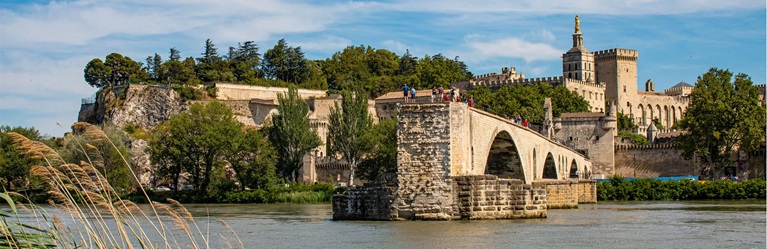
Why go?
Geneva is one of the most train-accessible cities in Europe - and it's also one of the finest starting points for a cycling holiday on the continent. The Via Rhôna follows the river from Lake Geneva all the way to Lyon, through landscapes that successive civilisations have used for more than 2,000 years.
The first days are unmistakably alpine: mountains pressing in on both sides, vineyards between peaks and valleys, the border crossing from Switzerland into France at Seyssel. The route becomes gentler through the Bugey plateau on days three and four - medieval villages, a waterfall at Glandieu, the "Petite Venise Savoyarde" (Rumilly-tourisme.com) at Chanaz. Day five reaches Pérouges (Wikipedia.org), a walled hilltop village that’s one of the most beautiful in France.
The final day follows cycle paths through the parks of greater Lyon before arriving in the city centre along the Rhône's banks, finishing at the Musée des Confluences (Museedesconfluences.fr) - a striking contemporary building at the point where the Rhône meets the Saône. Lyon's status as one of the foodiest cities in France means the evening refuel after a long day’s cycling is always a particularly special one.
The route:
Point-to-point from Geneva to Lyon. Lyon is a major TGV hub - direct trains to Paris take around 2 hours, making the return journey efficient from across the European rail network. Daily stages range from 46km to 66km, with the first day presenting the most climbing.
Details:
- Duration: 7 days
- Route: Geneva to Lyon
- Distance: ~282km over 5 cycling days
- Difficulty: Moderate
- Season: April–October (Friday, Saturday and Sunday starts)
- From: €1,059 per person (double room, standard hotels)
See our Via Rhôna cycling tour from Geneva to Lyon.
Getting there by train:
From the UK: Eurostar London to Paris (2h20), then TGV-Lyria from Paris Gare de Lyon to Geneva in 3h05 - fares from €29. A comfortable single-day journey (Seat61.com).
From the Netherlands: Eurostar Amsterdam to Paris (3h20), then TGV-Lyria to Geneva (3h05). A full day's travel, with enough time in Paris for a proper lunch if connections are planned accordingly (Seat61.com).
From Germany: One of the strongest German-market connections on this list - ICE or direct TGV from Frankfurt via Basel to Geneva in around 5h30. Book at int.bahn.de for through tickets from most German stations (Seat61.com).
Hadrian's Cycleway, Coast to Coast - Whitehaven, England
.jpg)
Why go?
Hadrian's Cycleway (National Cycle Network Route 72) follows the line of the Roman emperor's Wall from the Cumbrian coast to the Tyne - coast to coast across the breadth of northern England.
It’s genuinely different from the other options we’ve picked out: moorland, Roman forts, Saxon abbeys, a landscape shaped by 2,000 years of frontier history. The starting town of Whitehaven carries its own footnote: in 1778, John Paul Jones led the last foreign naval raid on an English port here (History.com) - the only attack on British soil by the fledgling American Navy, during the Revolutionary War.
The first days hug the Solway Coast - an Area of Outstanding Natural Beauty (Solwaycoast-nl.org.uk) - before Carlisle marks the turn inland. The route then climbs into the Pennines, past Birdoswald fort and the Roman Army Museum at Greenhead (Romanarmymuseum.com), and on to Vindolanda, the most extensively excavated site on the entire Wall and home to some of the most remarkable Roman artefacts found anywhere in Britain (Vindolanda.com).
Day seven descends along the River Tyne to Newcastle, passing seven bridges in the space of a mile, before the final mile to Tynemouth and the North Sea. Time to put put your feet up and celebrate in local style: with fish, chips and a pint.
The route:
Point-to-point from Whitehaven to Tynemouth. Day two begins with a taxi transfer to Ravenglass, the official western start of the Cycleway at the Glannoventa Roman Bath House. The tour's end at Tynemouth is easily connected by metro to Newcastle Central station and the national rail network.
Details:
- Duration: 8 days
- Route: Whitehaven to Tynemouth
- Distance: ~273km over 6 cycling days
- Difficulty: Moderate
- Season: March–October
- From: €1,157 per person (double room)
See our Hadrian’s Cycleway cycling tour.
Getting there by train:
From the UK: London Euston to Carlisle by Avanti West Coast (around 3 hours), then Northern Rail's Cumbrian Coast line to Whitehaven (around 1h20). Through tickets from London to Whitehaven are available via nationalrail.co.uk, though booking each leg separately often yields cheaper advance fares (Nationalrail.co.uk).
From the Netherlands: Two honest options: the DFDS overnight ferry from IJmuiden (Amsterdam) to Newcastle - flagged on the product page itself - then train to Carlisle and Whitehaven; or Eurostar to London and train north. The ferry is arguably the more interesting arrival (Dfds.com).
From Germany: Eurostar to London via Brussels, then train north - around 8–9 hours from Cologne depending on connections. It's a commitment, but it also means the first night in Whitehaven follows a proper cross-continental journey (Nationalrail.co.uk).
Maastricht, Netherlands - Five Countries, One Converted Railway
Why go?
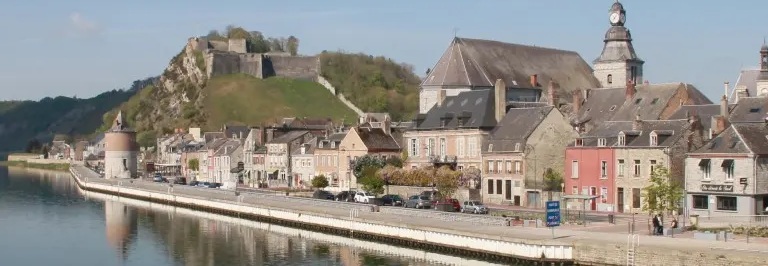
This route starts and ends in Maastricht - which makes the logistics unusually clean. It also covers five countries in 10 days, which gives it a reasonable claim to being the most European cycling holiday on this list.
The first loop follows the International Meuse Route (EuroVelo 19) south from Maastricht through Belgium and into France, tracing the Meuse through some of its most impressive river scenery: Liège, Namur, the medieval castle at Bouillon, the vast fortifications at Sedan - Europe's largest castle (Charleville-sedan-tourisme.fr) - and the landscape around Charleville-Mézières. Days six and seven cut back through Bastogne - Battle of the Ardennes territory (Wikipedia.org) - and into Luxembourg.
Then comes the Vennbahn. The 125km Vennbahn Rail Trail is a converted railway, and cycling it from Troisvièrges in Luxembourg through the High Fens-Eifel Nature Park (Visitwallonia.com) to Aachen in Germany has a particular resonance on a train-accessible holiday - you are riding the trackbed of a former cross-border passenger line. Because the railway was ceded to Belgium after the First World War, the trackbed itself remains Belgian territory, creating five small parcels of German land entirely surrounded by a cycling path.
Aachen cathedral (Aachenerdom.de) and medieval Rathaus make a fittingly monumental final night.
The route:
A fully circular tour from Maastricht - the only other loop on this list alongside Girona. The Ardennes stages (particularly Day 6, with up to 1,485m of ascent) are the most demanding; e-bikes are worth considering for those sections.
Details:
- Duration: 10 days
- Route: Circular from Maastricht
- Distance: ~562km over 9 cycling days
- Difficulty: Moderate
- Season: May–September (Wednesdays only)
- From: €1,095 per person (double room)
See our Meuse River and Vennbahn Rail Trail tour from Maastricht.
Getting there by train:
From the UK: Eurostar London to Brussels (2 hours), then IC train to Liège (1 hour), then the cross-border "Drielandentrein" regional service to Maastricht (around 35 minutes). Total journey around 4–5 hours - one of the more efficient cross-Channel connections on this list (Thetrainline.com).
From the Netherlands: Direct IC from Amsterdam Centraal to Maastricht in around 2h30 - as close to a domestic journey as this list gets (Ns.nl).
From Germany: The most German-friendly connection on this list. ICE to Aachen Hbf, then the Drielandentrein regional service direct to Maastricht (around 30 minutes) - the same train that forms part of the tour itself. Around 1h10 from Cologne, 2h10 from Frankfurt (Int.bahn.de).
Canal de Garonne to the Ville Rose - Bordeaux, France
Why go?
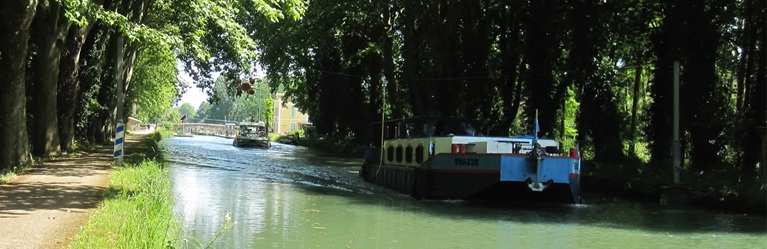
The Canal de Garonne was built in the 19th century to link the Atlantic to the Mediterranean - a counterpart to the Canal du Midi that runs east from Toulouse. Following it by bike from Bordeaux to Toulouse means 210km through southwestern France, more than half of it on flat canal towpath with plane trees for shade and a working waterway for company.
The first two days cycle through Bordeaux wine country - Cadillac, Entre-Deux-Mers, the winding lanes that produce some of France's most celebrated reds - before the Voie Verte towpath takes over at Castets-en-Dorthe. From Meilhan-sur-Garonne the route is essentially flat: an aqueduct crossing at Agen, plum orchards through Lot-et-Garonne, and an unexpected Rembrandt in the church at Mas d'Agenais (Valdegaronne-tourisme.com).
Moissac on day five is a UNESCO World Heritage site and an important stop on the Chemin de Saint-Jacques de Compostelle. The 11th-century Abbey of St Pierre and its cloister are among the finest Romanesque buildings in France (Abbayemoissac.com). The final day follows the canal through to Toulouse - the pink city, the Ville Rose - where the Canal de Garonne meets the Canal du Midi.
The route:
Point-to-point from Bordeaux to Toulouse. Direct trains back to Bordeaux take 2–3 hours, or Toulouse can be used as a departure point for TGV connections home - the city is about 4h20 from Paris by high-speed train.
See our cycling tour of the Canal de la Garonne.
Details:
- Duration: 7 days
- Route: Bordeaux to Toulouse
- Distance: ~210km over 5 cycling days
- Difficulty: Moderate
- Season: April–October
- From: €964 per person (double room)
- See our Canal de la Garonne cycling tour.
Getting there by train:
From the UK: Eurostar London to Paris (2h20), then cross Paris to Gare Montparnasse - allow at least 60–70 minutes total for the transfer, including queues and the size of the stations. TGV to Bordeaux (2h15). Around 6 hours in total - book early for the best TGV fares (Seat61.com).
From the Netherlands: Eurostar Amsterdam to Paris (3h20), cross to Gare Montparnasse, then TGV to Bordeaux (2h15). A full day's travel - the Paris connection gives a natural break for lunch or a coffee at the Gare de Lyon (Sncf-connect.com).
From Germany: TGV or ICE from Frankfurt to Paris Gare de l'Est (around 3h40), then cross to Gare Montparnasse - allow at least 60–70 minutes total for the transfer. TGV to Bordeaux (2h15). Around 7.5 hours from Frankfurt - Paris is a natural overnight stop if preferred (Seat61.com).
Inspired by our pick of cycling holidays accessible by train in Europe? See our guide to the continent's most family-friendly cycling destinations.
Marketing, Web & Design
After studying in my hometown of Barcelona and spending several years abroad, I relocated in 2018 to Cabrales, a beautiful rural area in Northern Spain. I invite you to check out some photos of Cabrales to see the incredible views we enjoy from our office!
After a few years in reservations, I now manage the website and marketing for S-Cape Travel, where I handle design tasks, blog writing, and attend specialized travel fairs.
Most popular








Contact
-
Edificio Sovega bajo, Crta General s/n
33554 Arenas de Cabrales
Asturias , Spaininfo@s-capetravel.eu
+34 (0) 985 846 455
UK call free 0800 707 44 35 -





Opening hours: Mon-Fri 9:00am – 6:00pm (CET)
Opening hours: Mon-Fri 9:00am – 6:00pm (CET)