






Which Camino de Santiago Route Should I Walk?
There are nine official routes to Santiago de Compostela, and if you've started researching, you'll already know that choosing between them is not quite as straightforward as it sounds.
Each route has its own character, its own rhythm, its own landscape - and the right choice really does depend on who you are and what you're looking for.
In this guide we walk you through the main options, route by route and traveller type by traveller type, so you can arrive at the decision with confidence rather than anxiety.
Camino de Santiago Routes: A Quick Overview
The Camino de Santiago is not a single path - it's a network of pilgrimage routes that converge on the Cathedral of Santiago de Compostela in Galicia, north-west Spain. All of them earn you the Compostela certificate, provided you walk at least the final 100km on foot (or 200km by bike). The routes vary enormously in length, terrain, crowd levels and overall character.
The routes we cover in this guide are the Camino Francés, Camino Portugués, Camino del Norte, Camino Primitivo, Camino Sanabrés and Camino Lebaniego. Between them, they cover everything from Basque clifftops and Asturian fishing villages to the ancient forests of interior Galicia and the dramatic peaks of the Picos de Europa.
Quick Comparison of the Main Camino Routes

Camino de santiago routes map
| Route | Staring point | Distance | Duration | Difficulty | Character | Best for |
Camino Francés (last 100km) |
Sarria |
± 118 km |
6 days |
Moderate |
Classic, social, woodland Galicia |
First-timers, iconic Camino experience |
Camino Portugués (last 100 km) |
Tui |
± 120 km |
7 days |
Easy–Moderate |
Coastal estuary, food, culture |
Beginners, foodies, short-break walkers |
Camino del Norte |
Bilbao |
± 490 km |
Full route |
Moderate–Hard |
Dramatic coastline, fishing villages, cities |
Coastal walkers, culture seekers |
Camino Primitivo |
Oviedo |
± 320 km |
Full route |
Hard |
Mountains, ancient forests, remote |
Experienced walkers, solitude seekers |
Camino Sanabrés |
Ourense |
± 160 km |
6 days |
Moderate–Hard |
Interior Galicia, monasteries, thermal baths |
Experienced walkers, off-the-beaten-track |
Camino Lebaniego |
San Vicente de la Barquera |
± 72 km |
5 days |
Moderate–Hard |
Picos de Europa, river valleys, pilgrimage monastery |
Mountain lovers, short pilgrimage |
Looking for more information on the distances involved? Find out more in our post on lengths and timings.
The Best Camino Route for You
The table gives you the facts. What follows gives you the feeling.
Best Camino for First-time Walkers
If this is your first Camino, both the Camino Francés (from Sarria) and the Camino Portugués (from Tui) are excellent starting points, for different reasons.
The Camino Francés from Sarria is the classic introduction. When it received UNESCO World Heritage status in 1993 (https://whc.unesco.org/en/list/669), it was the first time the designation had ever been applied to a linear pilgrimage route rather than a city or building. It was a distinction that helped change the way cultural heritage is classified worldwide.
These days, the path is well-marked and the pilgrim infrastructure along the way is the best of any route. The communal energy - particularly as you get closer to Santiago - is unlike anything else. You’re unlikely to be short of friendly company.
The six-day stretch from Sarria is also the minimum distance required to earn the Compostela, which makes it a practical option if your time is limited.
The Portugués from Tui is the gentler choice. The stages are shorter, the terrain is easier, and the route takes you through some beautiful Galician river and estuary landscape before delivering you into Santiago. The food along the way - oysters at Arcade, the peppers of Padrón (see below) - is a genuine highlight.
Need to know: The origins of the Cathedral of Santa María in Tui stretch all the way back to 1120. Its fortress-like appearance and battlements were built not for style, but as a functional defensive structure against potential invasions from across the river in Portugal (https://turismoriasbaixas.com/en/tui-cathedral-heritage).
Best Camino for the Last 100km
Walking just the final 100km is a completely legitimate way to do the Camino - and for many people, the right one. You still earn the Compostela, you still get the full emotional arc of arrival, and you can do it in a week or less.
For the Camino Francés, Sarria is the standard 100km starting point - and the first day's walk from there ends in Portomarín. A town with a quietly remarkable history, Portomarín’s entire medieval centre was dismantled stone by stone and rebuilt on higher ground when the valley was flooded for a reservoir in 1962. Each block was numbered before removal; you can still read the markings on the walls of the 12th-century fortress-church that now anchors the town square (https://turismo.ribeirasacra.org/en/church-of-san-xoan).
For the Portugués, Tui sits just over 100km from Santiago and makes for a lovely week-long walk. Like the Camino Francés, it’s well set up for walkers joining mid-route.
See our full guide to the Camino Portugués
Need to know: If you’re interested in a secular record of your journey, the Pilgrim’s Office offers a ‘Distance Certificate’ (Certificado de Distancia). Larger and more detailed than the traditional Compostela certificate, it records the pilgrim’s starting point and the total kilometres completed, providing a clear, non-religious account of the journey. You can find out more on the Pilgrim’s Reception Office website, here: https://oficinadelperegrino.com/en/pilgrimage/certificate-of-distance/.
Best Camino for Coastal Walking
For dramatic, sustained coastal scenery, nothing in the Camino network matches the Camino del Norte. Starting in Irún, it runs almost the entire length of Spain's northern coast - through the Basque Country, across Cantabria and along the Asturian coastline - before turning inland into Galicia. Clifftops, fishing villages, ferry crossings, wild beaches: it has it all.
To be perfectly clear, though: the Norte is also one of the more physically demanding routes. The stages are not short, and the terrain is varied and occasionally rough. You'll need a decent level of fitness and comfortable footwear. The reward is a route that feels genuinely different from anything else on the network.
The 15th-century monastery at Zenarruza, tucked into the hills of Bizkaia above the town of Markina, was formally required by royal decree to shelter pilgrims travelling the northern coast (https://tourism.euskadi.eus/en/monastery-of-zenarruza). King Juan I of Castile granted it the revenues of a local church specifically to maintain a pilgrim hospital - a funding arrangement that underlines how seriously the medieval crown took the welfare of walkers on this route.
See our full guide to the Camino del Norte
Need to know: While it’s almost certainly a modern romantic invention, popular legend suggests that the medieval ‘Game of the Goose’ was actually created by the Knights Templar as a coded map or guide for the Camino. The ‘goose’ symbols, it’s claimed, represent safe houses and resting points (https://en.wikipedia.org/wiki/Game_of_the_Goose).
Best Camino for Mountain Walking
The Camino Primitivo is the ‘Original Way’. It’s the oldest pilgrimage route to Santiago - having been walked by King Alfonso II of Asturias in the 9th century - and it remains one of the most challenging. From Oviedo, it climbs into the mountains of inland Asturias and crosses some genuinely wild terrain before descending into the more benign terrain of Galicia.
The Ruta de los Hospitales section, between Borres and Berducedo, is the defining stage of the whole route: a high moorland traverse with medieval hospital ruins and views that go on forever. The section follows ancient trails originally engineered by the Romans to provide access to the gold mines of the Asturian mountains.
See our full guide to the Camino Primitivo
Best Camino for Experienced Walkers who Want Solitude
If you've walked a Camino before and want something less trodden, two routes deserve your attention: the Camino Primitivo and the Camino Sanabrés.
The Primitivo we've covered above. The Sanabrés is less well-known still. It starts from Ourense - a city famous for its thermal baths and well worth a day's exploration in itself (www.spain.info/en/ourense-thermal-baths/). It then threads its way through the interior of Galicia, visiting the vast Cistercian monastery of Oseira before joining the Vía de la Plata for the final approach to Santiago. Expect quiet rural stages, few other pilgrims, and a landscape that feels a long way from the busy final stretch of the Francés.
Both routes require good physical preparation. The Sanabrés in particular has some challenging ascents early on, and the infrastructure is thinner than on the more popular routes - which is precisely the point.
See our full guide to the Camino Primitivo
Need to know: The Camino Sanabrés passes directly through the grounds of the Monastery of Santa María de Oseira - one of the largest monastic complexes in Spain, founded in the 12th century and still home to a working Cistercian community (https://www.turismo.gal/santa-maria-de-oseira).
The name is derived from the Latin Ursaria, meaning “land of bears”, referencing the brown bears that once roamed the surrounding mountains.
Best Camino for Food & Culture
Two routes lead here, and they offer very different northern Spanish food stories.
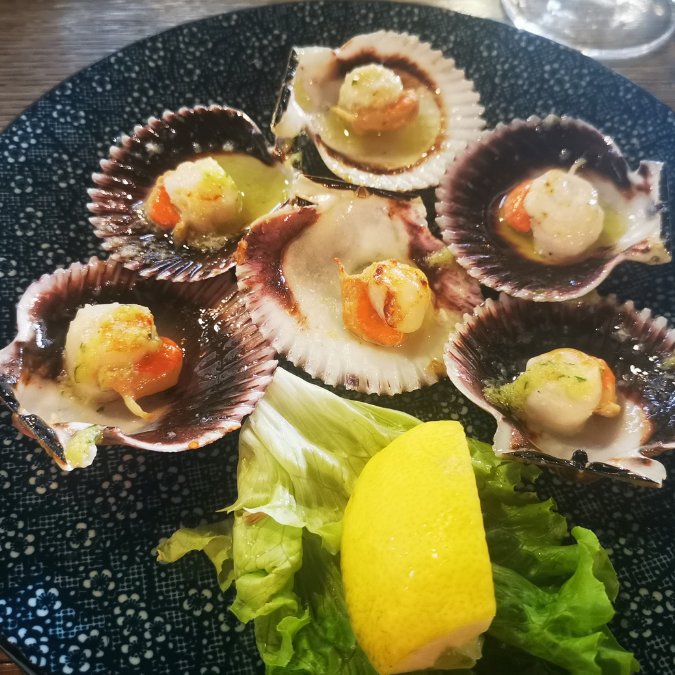
The Camino Portugués from Tui is a gastronomic journey as much as a pilgrimage. You pass the oyster beds at Arcade, a village that basically exists to feed pilgrims fresh shellfish at lunch. The final stage via Padrón brings you through the home of the famous wrinkled green peppers that bear the town's name.
Pontevedra, which you reach on day four, has one of the best-preserved old towns in Galicia and a restaurant scene to match (www.visit-pontevedra.com/en/historical-center).
The Camino del Norte, by contrast, starts in pintxos-and-cider country. The Basque coast in the early stages is excellent eating territory, and as you move into Asturias the fabada, the cider poured from height at arm's length, and the fresh seafood from the fishing ports become the recurring pleasures of the day.
Need to know: In the town of Padrón, you can view the "Pedrón", a Roman stone altar located under the altar of the Church of St James, where the boat carrying the Apostle’s remains was purportedly moored (https://blog.turismo.gal/the-pedron-of-padron).
 |
 |
 |
 |
 |
 |
How to Choose the Right Camino
If you're still deciding, a few questions tend to cut through:
- How much time do you have? The shorter Camino routes (Portugués from Tui, Francés from Sarria, Lebaniego) can be done comfortably in a week. The Norte and Primitivo are multi-week undertakings.
- What's your fitness level? Be honest. The Norte and Primitivo are genuinely hard. If you haven't been walking regularly, the Portugués or Francés last 100km are the better starting points. (Find out more on the respective difficulty levels.)
- Coast or mountains? The Norte gives you the sea. The Primitivo and Lebaniego give you the peaks. The Portugués gives you both, in more modest form.
- Do you want company or solitude? The Francés last 100km and Portugués from Tui are sociable, busy routes. The Sanabrés and Primitivo are where you go to be alone with the path.
- When are you going? Some routes suit certain seasons better than others. If your visit falls during a ‘Holy Year’ (Xacobeo - https://en.wikipedia.org/wiki/Jacobean_Holy_Year) - when St James's Day is on a Sunday - you can enter the Cathedral through the "Holy Door" (Puerta Santa), which is otherwise kept walled up with stones. Before you finalise your dates, read our guide to the best time of year to walk the Camino.
Frequently Asked Questions
What’s the easiest Camino route?
The Camino Portugués from Tui is generally considered the most accessible route, with shorter daily stages and gentler terrain than most alternatives. The Camino Francés from Sarria is similarly beginner-friendly and benefits from the best pilgrim infrastructure of any route.
What’s the shortest Camino route?
The Camino Lebaniego, at around 72km, is the shortest route in our portfolio and one of the shortest official Caminos. The Camino Francés from Sarria (118km) and Portugués from Tui (120km) are the shortest options that earn the Compostela certificate on the most popular routes.
Which Camino is the most scenic?
It depends on what you mean by ‘scenic’. For coastal drama, the Camino del Norte is unmatched. For mountain grandeur, the Primitivo and Lebaniego are exceptional. The Portugués offers some of the most beautiful rural Galicia on any route. Most experienced Camino walkers will tell you there's no bad answer to this question.
Which Camino is the quietest?
The Camino Sanabrés and the Camino Primitivo carry a fraction of the pilgrim numbers of the Francés or Portugués. The Sanabrés in particular is one of the least-walked Caminos in our portfolio, which makes it an excellent choice if solitude and an off-the-beaten-track experience matter to you.
What’s the story with the famous yellow arrows?
The ‘yellow arrows’ that define the route today are a modern addition. They were first painted in 1984 by Elías Valiña, a priest from O Cebreiro, who used leftover yellow paint from a road-marking crew to point people in the right direction.
Inspired by this run-through of the best Camino de Santiago routes? Take the next step with our full guide to walking the Camino de Santiago.
Marketing, Web & Design
After studying in my hometown of Barcelona and spending several years abroad, I relocated in 2018 to Cabrales, a beautiful rural area in Northern Spain. I invite you to check out some photos of Cabrales to see the incredible views we enjoy from our office!
After a few years in reservations, I now manage the website and marketing for S-Cape Travel, where I handle design tasks, blog writing, and attend specialized travel fairs.
Most popular








Contact
-
Edificio Sovega bajo, Crta General s/n
33554 Arenas de Cabrales
Asturias , Spaininfo@s-capetravel.eu
+34 (0) 985 846 455
UK call free 0800 707 44 35 -





Opening hours: Mon-Fri 9:00am – 6:00pm (CET)
Opening hours: Mon-Fri 9:00am – 6:00pm (CET)