






Best Camino de Santiago Stages
In the 12th century, the Codex Calixtinus - often considered the world's first travel guide - was written to advise pilgrims following the Camino de Santiago on which stages were safe and which regions had drinkable water (Wikipedia.org).
Fast-forward to the 21st century, and in this guide we've picked out the standout sections from each of the routes we walk: the stages that stop you in your tracks, reward every step of the climb, or leave you sitting at a café table at the end of the day feeling quietly moved by the day's walking.
Every Camino has its rhythm. So this isn't a definitive ‘ranking’ - the Camino doesn't really work like that. It's a map of highlights, organised by the type of experience you’ll have, so you can find the stages and routes that speak to you.
Best Camino Stages by Experience
Best Coastal Stage - Bilbao to Castro Urdiales (Camino del Norte)
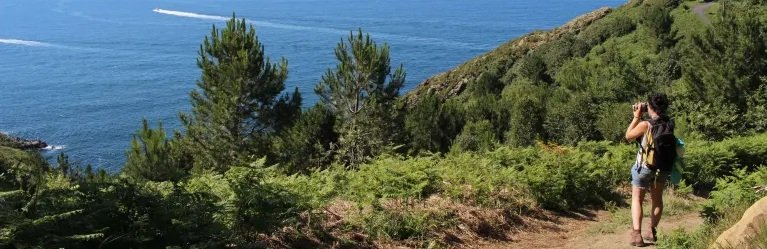
Day two of the Camino del Norte is one of the most visually striking stages on any Camino. Leaving Bilbao behind, the path climbs onto coastal headlands with the Cantabrian Sea below and barely loses sight of it for the next 40-odd km.
The cliffs are dramatic, the light on the water changes by the hour, and the arrival into Castro Urdiales - a medieval port town with the dramatic Gothic church of Santa María de la Asunción (Spain.info) perched above the harbour - feels genuinely earned.
Because this is a hard stage. 41km with significant elevation change is not something to be taken lightly. But if you're fit and the weather's good, it's the kind of walking day that becomes a reference point for everything that comes after.
Keep your eyes peeled for… Built in 1983, the Vizcaya Bridge near Bilbao, which pilgrims cross on this stage, is the world's oldest transporter bridge (Wikipedia.org). Walkers can choose to cross the river in a gondola suspended from a high rail rather than walking the extra distance to a standard bridge.
Full guide: Camino del Norte
Best Mountain Stage - Borres to Berducedo, Ruta de los Hospitales (Camino Primitivo)
The Ruta de los Hospitales is the stage that defines the Camino Primitivo. Between Borres and Berducedo, the path follows a high moorland ridge - named for the medieval pilgrim hospitals that once stood along it - with views across the mountains of Asturias that on a clear day seem to go on without limit. There are no villages, no cafés, no reliable water sources. Just the path, the wind, and the particular silence of high ground.
The stage covers 18 to 22km, depending on the variant taken, and the classification is hard. Come prepared with food, water and layers. Many regular pilgrims consider this their favourite stage of any Camino they've walked.
Keep your eyes peeled for… The three ruined medieval hospitals on this ridge (Paradiella, Fonfaraón, and Valparaíso) were specifically founded at high altitudes to provide emergency shelter from sudden mountain blizzards, which could be fatal to pilgrims in the Middle Ages.
Full guide: Camino Primitivo
Most Dramatic Stage - Puentenansa to Lebeña (Camino Lebaniego)
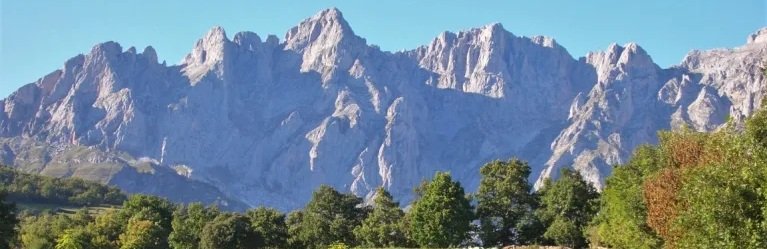
The Camino Lebaniego doesn't get the plaudits it deserves, and stages like this one are the reason that's a shame. Leaving Puentenansa, the path climbs out of the River Nansa valley into the foothills of the Picos de Europa - the dramatic limestone massif that forms one of Spain's most extraordinary landscapes. The views are spectacular, and the terrain is genuinely wild in places.
This is a hard stage of 13 to 17km, and the difficulty is real rather than statistical. But if you came to the Camino for the mountain experience rather than the social one, it's difficult to imagine a more rewarding day.
Keep your eyes peeled for…The church of Santa Maria de Lebeña (Spain.info). One of the finest examples of Mozarabic architecture in Spain, it features horseshoe arches that reflect the unique influence of Islamic design on Christian structures during the Reconquista.
Full guide: Camino Lebaniego
Best Cultural Stage - Santander to Santillana del Mar (Camino del Norte)
Santillana del Mar is one of the most perfectly preserved medieval towns in Spain - a place of cobbled streets, stone palaces and carved facades that hasn't changed its essential character in five hundred years.
Arriving on foot after 35km from Santander, having walked through the coastal countryside of Cantabria, means you'll really feel like you've earnt that first cold drink in the Plaza Mayor de Ramón y Pelayo, surrounded by handsome Renaissance palaces.
If you can spare the time, just outside town are the world-famous Caves of Altamira. This prehistoric cave complex is home to paintings from more than 36,000 years ago (Unesco.org).
Keep your eyes peeled for… The sea. You won’t spot it. Santillana del Mar is known as the ‘Town of the Three Lies’ because its name implies it is a saint ('santa'), flat ('llana'), and by the sea ('del mar'). But it’s actually none of those things.
Best Woodland Stage - Paradavella to Castroverde (Camino Primitivo)
After the high exposure of the earlier Primitivo stages, Paradavella to Castroverde offers a different kind of pleasure: 20km through the deep oak and chestnut forests of rural Galicia, with almost no other pilgrims and a quiet so complete it can feel slightly unreal. Stone-walled lanes, small farms, the occasional village - this is the interior of Galicia at its loveliest and most unhurried.
It's a moderate stage and one of the more accessible on the Primitivo. If you've earned your legs on the mountain days beforehand, this feels like the Camino exhaling.
Keep your eyes peeled for… Along these quiet forest trails, you can still find ‘corripas’ - ancient, circular stone structures once used by Galician farmers to store and protect chestnuts from the dual threats of wild boars and the damp.
Best Gastro Stage - Redondela to Pontevedra (Camino Portugués)
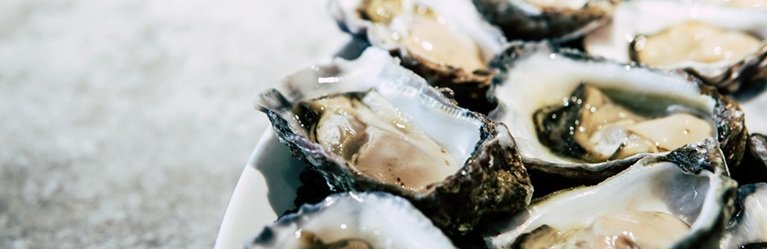
The village of Arcade sits roughly midway through this 20km stage, beside the tidal estuary of the Ría de Vigo. It's famous for one thing: oysters. The local beds produce some of the best in Galicia, and the waterfront bars that serve them have been feeding pilgrims for decades. There’s no more civilised way to spend a Tuesday lunchtime.
The stage ends in Pontevedra, whose old town is a consistently underestimated destination - a labyrinth of stone arcades, churches and squares that the city has had the good sense to close to traffic entirely. A moderate stage with a very good ending.
Keep your eyes peeled for… Those oysters. In the 19th century, the little molluscs from Arcade were so highly prized that they were pickled in small wooden barrels and exported directly to the royal courts of the Habsburg and Bourbon dynasties across Europe.
Full guide: Camino Portugués
Most Underrated Stage - Cea to A Gouxa, via the Monastery of Oseira (Camino Sanabrés)
Most people have never heard of Oseira. But sitting in a wooded valley in the interior of Galicia, largely hidden from the road and from the wider world, it houses one of the largest and most intact Cistercian monasteries in Spain (Spain.info). Founded in the 12th century, and still functioning, standing surrounded by the calm of its church and cloisters is a genuinely moving experience.
The Camino Sanabrés passes directly through it on day three, and the arrival - on foot, through the trees, with the monastery appearing gradually rather than all at once - is one of those Camino moments that earns its memory. The stage from Cea is classified as hard, with an early steep ascent, but Oseira is the reward for doing it properly.
Keep your eyes peeled for… Eucaliptine. The monks at the Monastery of Oseira produce a unique herbal liqueur distilled on-site from a secret recipe involving eucalyptus leaves and local medicinal plants (Mosteirodeoseira.org).
Best Classic Stage - Sarria to Portomarín (Camino Francés)
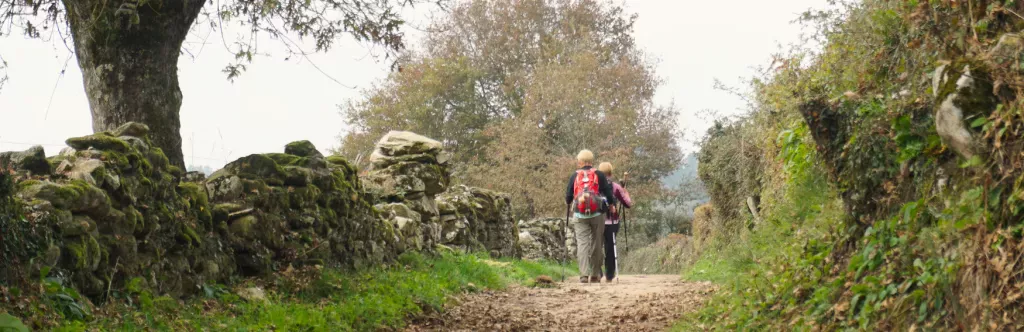
More pilgrims walk Sarria to Portomarín than any other single stage on any Camino. That fact is either a reason to choose it or a reason to avoid it, depending on what you’re looking to get from the experience - but the stage earns its popularity.
Leaving the stone streets of Sarria, the path drops into woodland and farmland, crosses a sequence of stone bridges and narrow lanes, and arrives at the dramatic staircase descent into Portomarín, a town that was literally dismantled and rebuilt on higher ground when its valley was flooded for a reservoir in the 1960s. The monastery-church that anchors the new town was moved stone by stone.
A moderate stage of 22km, sociable and well-served, with a genuinely interesting history embedded in its ending.
Keep your eyes peeled for… A bridge peeking out of the water. The original medieval bridge of Portomarín lies at the bottom of the reservoir; during periods of extreme drought, the water level drops enough for the 12th-century arches to emerge, making them visible to passing pilgrims.
The Best Final Stages - Arriving in Santiago
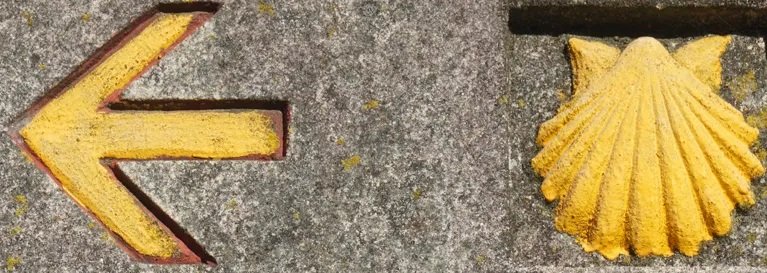
Every Camino converges on the same destination, but the approach to Santiago is different on each route, and the experience of arrival changes accordingly.
A Rúa to Santiago (Camino Francés)
The last 21km of the Francés follows a path thick with other pilgrims, building in energy and emotion as the spires of the cathedral first appear. The Monte do Gozo - Hill of Joy - is where pilgrims traditionally caught their first sight of the towers and where many still stop to absorb the moment. The arrival into the Praza do Obradoiro, through the stone archway of the old city, is the emotional climax of the whole journey.
Padrón to Santiago (Camino Portugués)
Padrón is the town where, according to legend, the stone boat carrying the body of St James is said to have first arrived in Galicia. Walking the final 25km from there to Santiago traces a route with deep pilgrimage meaning - through eucalyptus forest and small villages, gradually pulling you towards the city. A moderate stage of around 25km with approximately 645 metres of ascent.
Keep your eyes peeled for… The Pedrón stone. Found in the Church of Santiago at Padrón, it was originally a Roman altar dedicated to the god Neptune before it was later reused — according to legend — as the mooring stone for the boat carrying the Apostle’s remains (Turismo.gal)
Vedra to Santiago (Camino Sanabrés)
The Sanabrés approach to Santiago is one of the quietest. From Vedra, the path winds through rural countryside with little of the pilgrim traffic that characterises the Francés or Portugués finale. You arrive without fanfare, which for many walkers is exactly what they wanted.
Keep your eyes peeled for… An ancient stream. Historically, many pilgrims would stop at the Lavacolla stream just before the final approach to wash their bodies and put on their finest clothes as a mark of respect before entering the holy city.
Best Camino Stages by Difficulty
Easiest Stages
Some of the gentlest stages of any route are along the Camino Portugués. Tui to O Porriño (17km), for example, is an easy, welcoming introduction: short, flat in places, and well-signed. Arzúa to A Rúa on the Camino Francés (18km, easy) is another manageable stage for those looking for a comfortable day.
Most Challenging Stages
The Irun to San Sebastian/Donosti stage on the Norte (41km, hard) and the Ruta de los Hospitales on the Primitivo (18-22km, hard) are two stretches that require the most preparation. The Ourense to Cea is also hard - a steep ascent out of the city that earns you the calmer days that follow.
Frequently Asked Questions
What’s the most beautiful part of the Camino de Santiago?
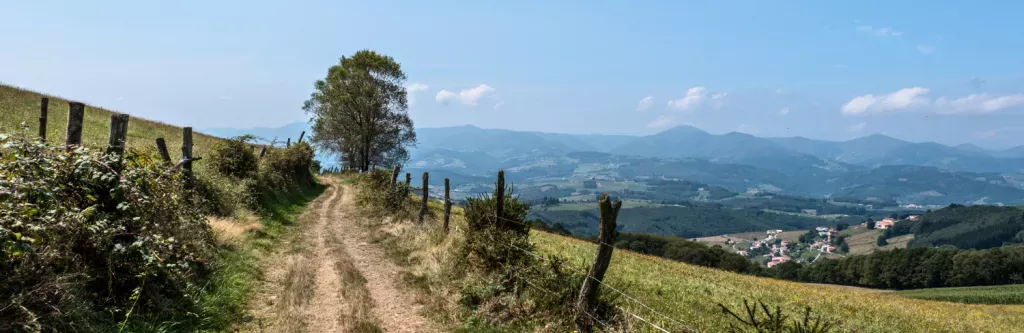
This is genuinely a matter of taste. The Ruta de los Hospitales on the Primitivo is frequently cited by experienced pilgrims as the single most memorable stage of any Camino. The Bilbao to Castro Urdiales coastal section on the Camino del Norte is visually extraordinary.
For sheer emotional impact, though, the final approach to Santiago on any route is difficult to match.
What’s the hardest Camino stage?
The Ruta de los Hospitales (Borres to Berducedo on the Primitivo) and some of the fisrt stages of the Camino del Norte, combining significant distance with elevation and exposure. Both require good preparation and appropriate kit.
Keep your eyes peeled for… Cairns. On the most challenging mountain passes, particularly, pilgrims traditionally add a stone to piles of rocks, known as "milladoiros" in Galician. The ritual is meant to symbolise the casting off of a personal burden before beginning the final descent toward Santiago.
What’s the easiest Camino stage?
The stages of the Camino Portugués are among the most accessible. Short, well-signed and relatively flat, they can be a good introduction to the Camino, and a good measure of whether a longer route is for you.
Which Camino stage has the best food?
The Redondela to Pontevedra stage on the Camino Portugués, with its oyster stop at Arcade, is hard to beat for a single memorable food moment. The early stages of the Norte through the Basque Country offer the most consistently excellent gastronomy.
For a broader view of the routes themselves, keep an eye out for our soon-to-launch guide to choosing the right Camino. Which Camino should I walk?
Or check out our complete guide to walking the Camino de Santiago.
Marketing, Web & Design
After studying in my hometown of Barcelona and spending several years abroad, I relocated in 2018 to Cabrales, a beautiful rural area in Northern Spain. I invite you to check out some photos of Cabrales to see the incredible views we enjoy from our office!
After a few years in reservations, I now manage the website and marketing for S-Cape Travel, where I handle design tasks, blog writing, and attend specialized travel fairs.
Most popular








Contact
-
Edificio Sovega bajo, Crta General s/n
33554 Arenas de Cabrales
Asturias , Spaininfo@s-capetravel.eu
+34 (0) 985 846 455
UK call free 0800 707 44 35 -





Opening hours: Mon-Fri 9:00am – 6:00pm (CET)
Opening hours: Mon-Fri 9:00am – 6:00pm (CET)